
Design and installation of EV chargers for homes, buildings, hotels and businesses in Pattaya, Chonburi and Rayong. We assess your electrical load, installation location and actual use before choosing equipment.
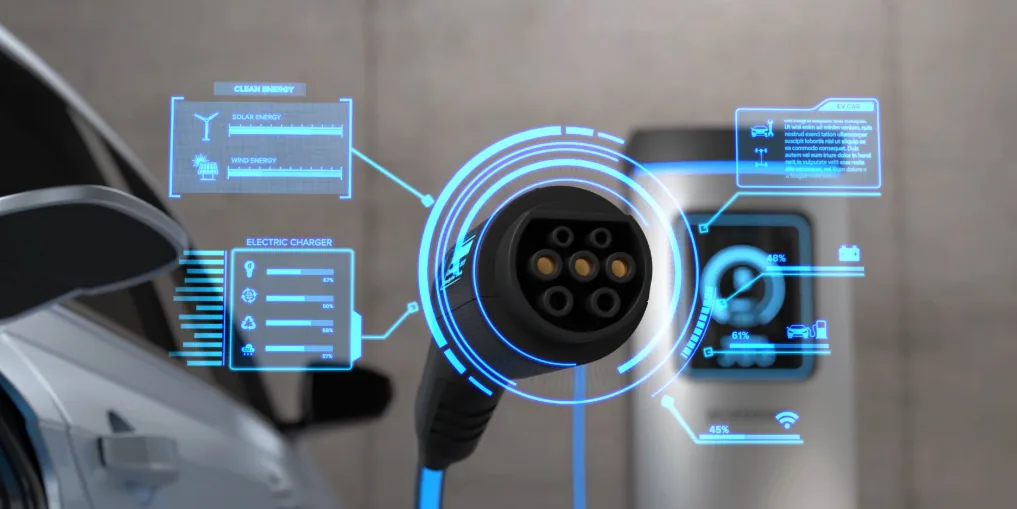
EV Charger Installation Guide for Pattaya, Chonburi and Rayong: Complete Solutions for Homes, Businesses and Factories in the EEC
Table of Contents
-
Introduction: why Pattaya, Chonburi and Rayong are key locations for electric vehicles (EVs)
-
What is an EV charger? AC and DC systems for each type of user
-
2.1 The difference between AC chargers (normal charge) and DC chargers (fast charge)
-
2.2 Connector types you should know (Type 2, CCS2)
-
-
EV charger strategies for businesses (commercial & hospitality)
-
3.1 Hotels and resorts in Pattaya: attracting EV travellers
-
3.2 Condominiums and housing estates: billing and load balancing
-
3.3 Shopping malls and cafes in Chonburi: more customer traffic with charging points
-
-
EV charger solutions for factories and industrial estates in Rayong and Chonburi (industrial)
-
4.1 Moving to a green fleet
-
4.2 Charging points for employees and transport vehicles
-
-
Home EV charger installation guide: what you need to prepare
-
5.1 Upgrading your electricity meter (TOU meter) with the PEA
-
5.2 Single-phase vs three-phase power: which should you choose?
-
5.3 Safety standards: RCBO breakers and grounding
-
-
Common problems and EV charger maintenance near the sea
-
6.1 The effect of salt spray and humidity on electronics
-
6.2 Choosing IP54/IP65-rated equipment
-
-
Why choose Systems Connect for EV charger installation in the Eastern region?
-
Summary: the future of EVs in the EEC and how to prepare
-
Frequently asked questions (FAQ)
1. Introduction: why Pattaya, Chonburi and Rayong are key locations for electric vehicles (EVs)
Electric vehicles are growing rapidly around the world, and Thailand has announced its 30@30 policy to make ZEVs (zero emission vehicles) 30% of total vehicle production by 2030. The area with the most potential is the Eastern Economic Corridor (EEC), which covers Chonburi, Pattaya and Rayong.
These areas are not only world-class tourist destinations but also fast-growing industrial and residential centres, so EV use here is very dense, coming from:
-
Tourists: who drive EVs from Bangkok to Pattaya, Sattahip or Koh Samet and need charging along the way or at their accommodation (destination charging).
-
Local residents: people in Chonburi and Rayong switching to EVs to save on the commute.
-
Business & industry: factories in industrial estates are starting to switch executive cars and transport vehicles to electric to meet ESG (environmental, social and governance) goals.
So “EV charger Pattaya, Chonburi, Rayong” is not a passing trend but essential infrastructure that every building, business and home should start planning for now. At Systems Connect we focus on installing systems that are standard-compliant, safe and ready for the future, so every energy connection in the Eastern region runs smoothly.
2. What is an EV charger? AC and DC systems for each type of user
Before you install an EV charging system, it helps to understand the technical differences so you can choose the most cost-effective and suitable solution.
2.1 The difference between AC chargers and DC chargers
-
AC Charger (Normal Charge):
-
How it works: Uses alternating current from your mains supply and sends it to the car’s on-board charger, which converts it to direct current for the battery.
-
Power: From 3.7 kW and 7.4 kW (single-phase) up to 11 kW and 22 kW (three-phase).
-
Charging time: 4-8 hours (depending on battery size).
-
Best for: homes, hotels, condominiums and places where cars are parked for a long time (overnight parking).
-
Advantages: Gentler on the battery, lower installation cost and cheaper electricity (with a TOU meter).
-
-
DC Charger (Fast Charge):
-
How it works: The charger converts power to direct current and charges the battery directly, bypassing the on-board charger.
-
Power: From 25 kW up to 360 kW (supercharger).
-
Charging time: 20-60 minutes (to 80% battery).
-
Best for: petrol stations, rest stops, shopping malls or businesses that need vehicles to turn over quickly.
-
Advantages: Very fast charging, but the charger and installation cost more and a large transformer is needed.
-
2.2 Connector types you should know (Type 2, CCS2)
For EVs in Thailand and the Asia-Pacific region, the main standards are:
-
Type 2: for AC charging (found on almost every EV model in Thailand, such as Tesla, BYD, ORA, MG and Volvo).
-
CCS2: for DC charging (adds pins below the Type 2 connector to support direct current).
Advice from Systems Connect: If you own a home or hotel in Pattaya, a Type 2 AC charger is the standard that covers almost all electric cars on the market today.
3. EV charger strategies for businesses (commercial & hospitality)
In tourist areas such as Pattaya and Bang Saen (Chonburi), an EV charger is not just a convenience but “magnet marketing” that attracts customers with strong spending power.
3.1 Hotels and resorts in Pattaya: attracting EV travellers
Tourists who drive an EV from Bangkok to Pattaya (about 150 km) often look for accommodation with a destination charger so they can charge overnight and wake up with a full battery.
-
Benefit: Hotels with EV chargers can be found in apps such as PlugShare and Google Maps.
-
Strategy: Install 7.4 kW or 22 kW (three-phase) AC wallboxes in the VIP parking area.
-
Systems Connect solution: We offer a management system that lets the hotel choose flexibly between free charging (to attract guests) or paid charging (to earn extra income).
3.2 Condominiums and housing estates: billing and load balancing
The biggest problems for condominium management in Chonburi and Pattaya are “not enough power” and “who pays for the electricity?”
-
Load balancing: Smart power management. When several cars charge at the same time, the system shares out the power so the main breaker does not trip.
-
User management: RFID cards or QR code payment identify who is charging and collect payment to the common fund accurately, with no more unauthorised use of power.
3.3 Shopping malls and cafes in Chonburi: more customer traffic
For cafes and restaurants, installing a small DC charger (for example 25-60 kW) or an AC charger can keep customers eating or drinking coffee for 1-2 hours longer while they charge, which can noticeably increase spending per head.
4. EV charger solutions for factories and industrial estates in Rayong and Chonburi (industrial)
The EEC (Amata City, Map Ta Phut industrial estates and others) is a key production base, and industry is focusing on carbon neutrality.
4.1 Moving to a green fleet
Many companies are switching executive cars and staff shuttle vans to electric to cut fuel and maintenance costs, so an in-factory fleet charging station becomes essential.
-
Advantages: Full control of energy costs, and the project can be counted towards the organisation’s environmental performance.
4.2 Charging points as an employee benefit
Several factories in Rayong have started installing EV chargers as a benefit for senior staff and engineers who drive EVs to work. It also builds a modern, innovative company image.
Systems Connect specialises in electrical installation in industrial plants. We understand the high safety standards (industrial grade safety) factories require, including conduit installation, explosion protection (in some areas) and surge protection.
5. Home EV charger installation guide: what you need to prepare
If you live in a detached house or townhouse in Pattaya, Chonburi or Rayong and are about to get an EV, these are the steps you need to know.
5.1 Upgrading your electricity meter (TOU meter)
Standard home meters are often 5(15)A or 15(45)A, which may not be enough for EV charging (which uses about as much power as running 3-4 air conditioners at once).
-
Recommendation: Apply for a dedicated new meter, or upgrade your existing meter to 30(100)A.
-
TOU (time of use) meter: We recommend switching to a TOU meter to get cheaper off-peak electricity (after 22:00 until 09:00, and all day on Saturdays and Sundays), which brings the cost of charging down to about 0.7-1 baht per kilometre.
5.2 Single-phase vs three-phase power: which should you choose?
-
Most EVs (BYD Atto 3, MG ZS EV, Tesla Model 3/Y): support AC charging at up to 7 kW or 11 kW.
-
Single-phase power: supplies up to about 7.4 kW (enough for overnight charging).
-
Three-phase power: supplies up to 22 kW (how much the car can take depends on its on-board charger).
-
Tip: If you plan to use several EVs at home in future, getting a three-phase supply now is far more flexible and better value.
-
5.3 Safety standards: no compromises
Installing an EV charger is not just plugging it in. It needs its own dedicated circuit.
-
Cable: Must be rated for high current (for example 6, 10 or 16 sq.mm., depending on the distance).
-
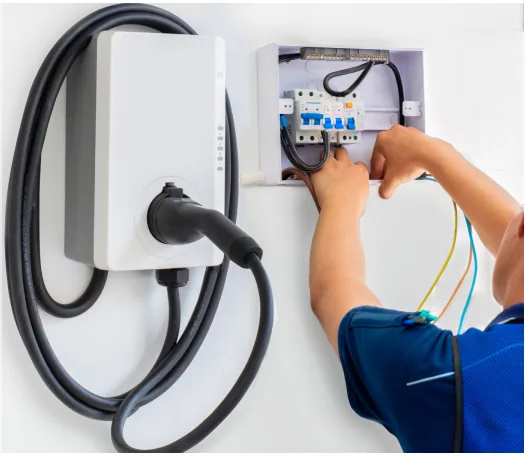
Breakers: You need a main breaker and an RCD Type B (or Type A + 6mA DC detection), a residual current device that can detect DC leakage current, which the ordinary home RCD (Type AC) cannot protect against.
-
Grounding: Earth resistance must not exceed 5 ohms according to the electricity authority standard, for maximum safety.
6. Common problems and EV charger maintenance near the sea
Pattaya, Chonburi and Rayong have a distinctive climate with high humidity and salt spray from the sea, which is a major enemy of electronic equipment.
6.1 The effect of salt spray
Salt spray can corrode circuit boards, connections and the charger housing if non-standard equipment is used, causing rust, short circuits and a short service life.
6.2 Choosing IP54/IP65 and IK10-rated equipment
At Systems Connect we take this very seriously. An EV charger for installation in the Eastern region should have these specifications:
-
IP54 or IP65: protects against dust and low-pressure water jets (rainproof).
-
IK08 or IK10: resistant to impact (very important for public installations).
-
Enclosure: For outdoor installation near the sea, add an extra enclosure or choose a charger made of corrosion-resistant materials.
7. Why choose Systems Connect for EV charger installation in the Eastern region?
Systems Connect is not just a charger seller. We are a system integrator that has served Pattaya, Chonburi and Rayong for many years.
What sets us apart:
-
Local expertise: Our team is local and understands site and weather conditions in the Eastern region, so we can reach your site quickly when there is a problem (service response).
-
Total solution: We handle everything from the site survey and electrical design to the PEA permit application, installation and after-sales service.
-
Brand variety: We are not tied to a single brand. We select leading global EV charger brands to suit your budget and needs (such as ABB, Siemens, Huawei, Wallbox and Delta).
-
Trained installers: Our installers are trained in EV charging station installation standards and understand three-phase factory power systems well.
-
Smart system: We offer a back-end solution for condominium management and hotels to manage billing and view usage data in real time.
8. Summary: the future of EVs in the EEC and how to prepare
Installing an EV charger in Pattaya, Chonburi or Rayong today is an investment in the future, whether you are a homeowner who wants convenience, a business owner looking for a marketing opportunity, or a factory owner who wants to cut energy costs.
A good-quality, safe charging system installed by professionals is the key to making EV ownership smooth and cost-effective.
9. Frequently asked questions (FAQ)
Q: How much does EV charger installation cost in Chonburi and Pattaya? A: It depends on the cable distance from the main panel and the charger specification. For homes, installation (excluding the charger) typically starts at around 12,000-15,000 baht.
Q: Can an EV charger be installed outdoors? A: Yes, but choose a charger rated IP54/IP65 or higher. Systems Connect recommends adding a roof or enclosure to protect it from sun and rain and extend its life.
Q: Does a Tesla need a Tesla charger? A: No. Teslas in Thailand use the Type 2 connector, so they can charge normally from other standard wallbox brands.
Q: The power in Rayong often drops. Will that cause problems for the charger? A: A good-quality charging system has under/over-voltage protection. If the voltage drops or spikes, the charger switches off automatically to protect the car.
Ready to install a standard-compliant EV charger in Pattaya, Chonburi or Rayong?
Don’t take risks with sub-standard electrical work. Let Systems Connect look after you, with a professional team based in the EEC.
What we will do for you straight away:
-
Free consultation: assess whether your electricity meter and installation location are suitable.
-
Site survey: our engineers visit your site in Pattaya, Chonburi or Rayong.
-
Good-value quotation: the right specification for how you will use it.
👉 Contact us today
📞 Contact us: 033-265-438, 096-246-2324
🌐 Facebook: facebook.com/sysnetpattaya
LINE: @Nicesystem
📍 Location: serving Pattaya, Chonburi, Rayong and nearby areas
Systems Connect: connecting every system to power your electric future
Plan your EV charger installation
Talk to the Systems Connect team in Pattaya, Chonburi and Rayong. Call 033-265-438 or 096-246-2324, or message us on LINE @Nicesystem.
Contact Us Call 033-265-438 Call 096-246-2324