
Fiber optic cabling installation in Pattaya, Chonburi and Rayong for businesses, factories and hotels
Systems Connect installs fiber optic cabling for businesses, organisations, factories, hotels and office buildings in Pattaya, Chonburi and Rayong, including splicing, cable testing, backbone design, CCTV, WiFi, IP-PABX and PON FTTX systems, carried out by a team experienced in communication systems and network infrastructure.
It suits sites that need high speed, good stability, long-distance connections and efficient support for future expansion.
|
Item |
Starting price |
Notes |
|---|---|---|
|
Fiber optic cable |
Per metre: call |
2 Core |
|
Cabling labour |
Per metre: call |
Price depends on how difficult the job is |
|
Fiber optic splicing |
Call |
Price depends on the number of terminations |
|
Fiber cable tray |
Call |
– |
|
Other accessories |
Call for a price |
Call for a price |
Interested in fiber optic installation in Pattaya, Chonburi or Rayong? Contact us now:
📞 Call: 096-246-2324 (Khun Mai), 033-265-438
📱 LINE: @Nicesystem
📍 Service area: Pattaya, Bang Lamung, Sattahip, Si Racha, Chonburi city, Amata, Pluak Daeng, Rayong and nearby areas
Fiber optic cable
Fiber optic cable has a core made of pure glass fiber. Its main job is to carry light from one end to the other, which is used to transmit computer network data and other kinds of communication.
Because data travels as light through the glass fiber, fiber optic cable can carry data over very long distances and in very large amounts (bandwidth), and it is not affected by electrical interference.
Today computers need media that can carry ever larger amounts of data, so fiber optic is a good solution. Equipment and installation costs for fiber have also fallen a lot, which has made it much more popular.
Today fiber is mostly used for the main backbone and is not yet common for individual points inside buildings, where copper cable is still used. In the near future, though, we may see fiber run to individual points inside buildings, because copper is becoming more expensive and harder to find.
Our fiber optic services
1. Fiber optic cabling to connect your network
Networks have developed rapidly and now need high stability and speed. Fiber optic is the answer for today’s networks, with many advantages.
2. Fiber optic cabling for CCTV
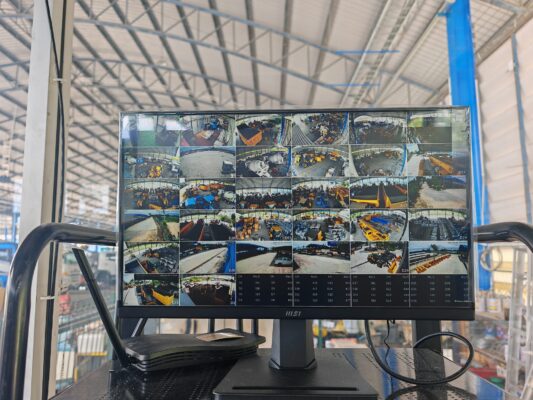
Fiber reaches much further than copper signal cable, and the equipment is now much cheaper, so a CCTV system on fiber can cost much less than one on copper. It suits large systems that need long cable runs, such as housing estates, hotels, factories and more.
3. Fiber optic cabling to connect IP-PABX telephone systems
When connecting a PABX between buildings, offices or hotel blocks over long distances, fiber cabling is key to linking the systems so they work together efficiently.
4. Fiber optic internet cabling with PON FTTX
FTTx stands for “fiber to the x”, meaning high-speed internet delivered over a fiber optic network run directly to the destination (x). FTTx can carry large amounts of data and send signals over long distances without outside interference, compared with ADSL, which sends electrical signals over traditional copper cable, or 3G/4G wireless, which averages only 10-150 Mbps.
Which types of site do we install fiber optic for?
Our service suits many types of site, especially businesses that need a stable network that supports many devices and is easy to expand in future.
Hotels and resorts
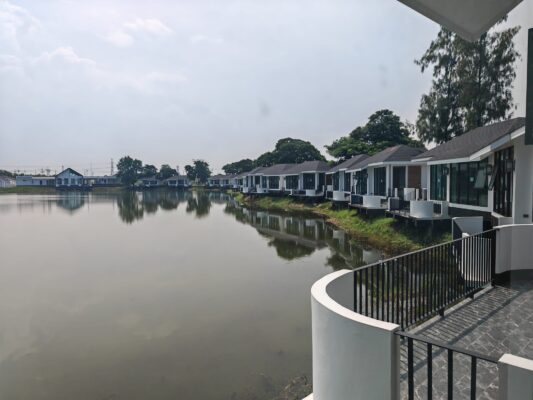
For distributing internet, CCTV, WiFi and internal communication systems that must support many users across several floors or buildings.
Factories and warehouses
For links between buildings, camera systems, control systems and networks across large areas that need long, highly stable cable runs.
Office buildings
Makes the building’s network infrastructure efficient, supports many departments at once and is ready for future expansion.
Multi-building or multi-point projects
For sites that need a backbone connecting several buildings, zones or areas, such as schools, hospitals, residential projects or distribution centres.
Fiber backbone for factories, warehouses and multi-building sites
When connecting buildings or distant areas, consider the backbone structure, spare cores for expansion, splice points, patch panels, labelling and a test plan after installation. Fiber work should be planned together with enterprise network design so WiFi, CCTV, office systems and other equipment fit properly into the same topology.
Cabling design inside and between buildings should follow international standards such as ANSI/TIA-568 (Telecommunications Industry Association) and ISO/IEC 11801-1 Generic cabling for customer premises. The properties of the commonly used single mode cable are defined in ITU-T G.652.
Fiber optic connector types and our termination service
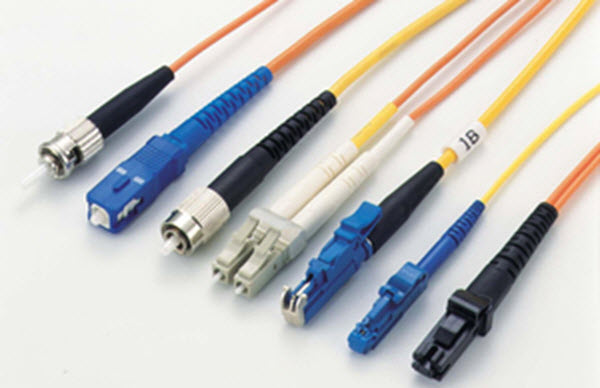
A fiber optic connector joins the glass fiber cable to equipment such as a switch, media converter, ODF or patch panel. If you choose the wrong connector type or the termination is not up to standard, signal loss will be high and the system will be unstable. The connectors most often found in businesses and factories are:
- SC: a square push-pull connector, widely used in FTTx and ODFs
- LC: a small connector used with SFP modules on newer switches, saving space in the rack
- FC: a screw-locking connector that resists vibration, found in industrial work and test equipment
- ST: a bayonet twist-lock connector, found in older multi mode systems
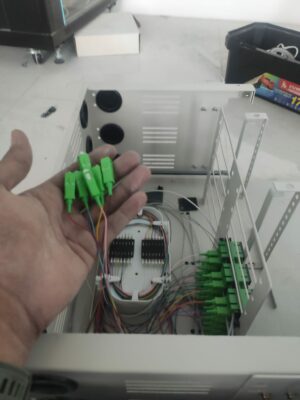
As well as the connector type, there are two end-face polishes: UPC (blue boot) and APC (green boot, polished at an 8-degree angle). Both ends must match, and an APC connector should never be connected directly to a UPC one. For pictures and details of each connector type, see The Fiber Optic Association (FOA) connector identification guide.
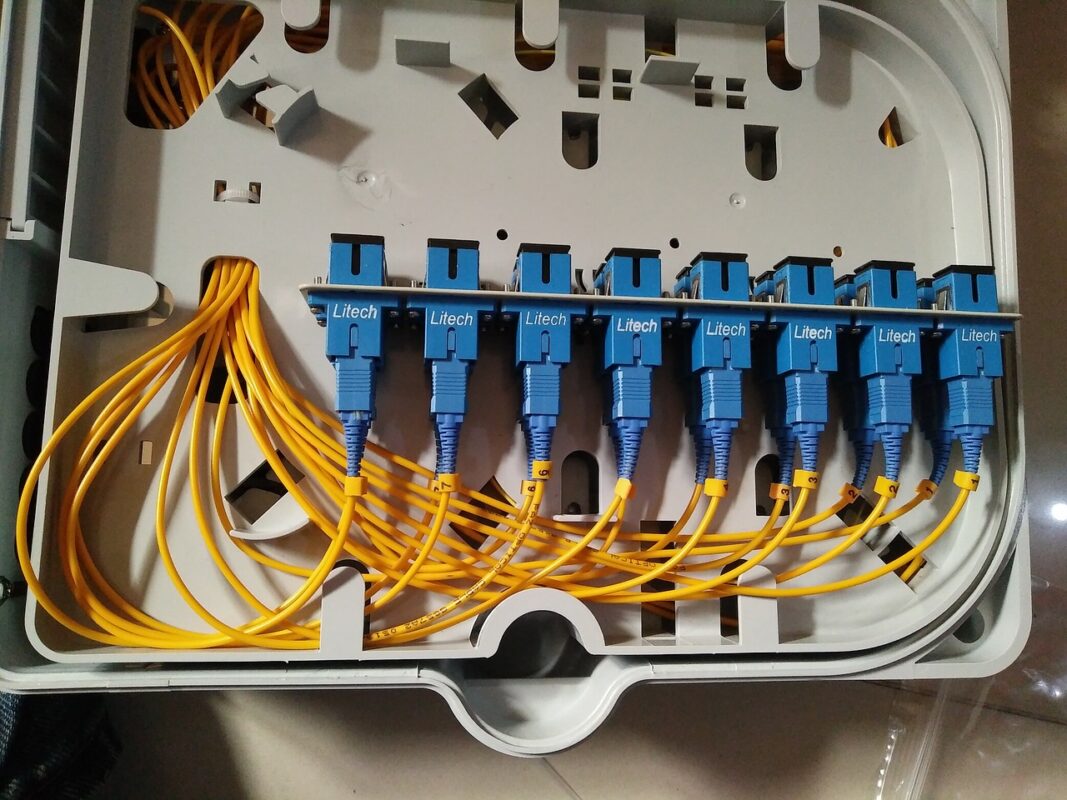
Systems Connect terminates fiber by fusion splicing to pigtails and neatly stores the cables in an ODF or patch panel, in Pattaya, Si Racha, Sattahip, Laem Chabang, Chonburi and Rayong. If you are not sure which connector your equipment uses, send a photo of the port or the equipment model to LINE @Nicesystem and our team will advise you.
Splicing / fusion and cable testing with a test report
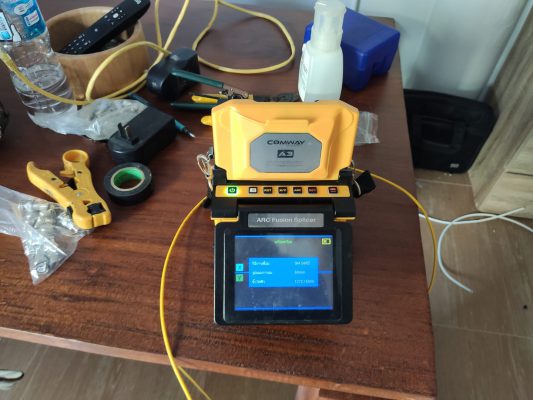
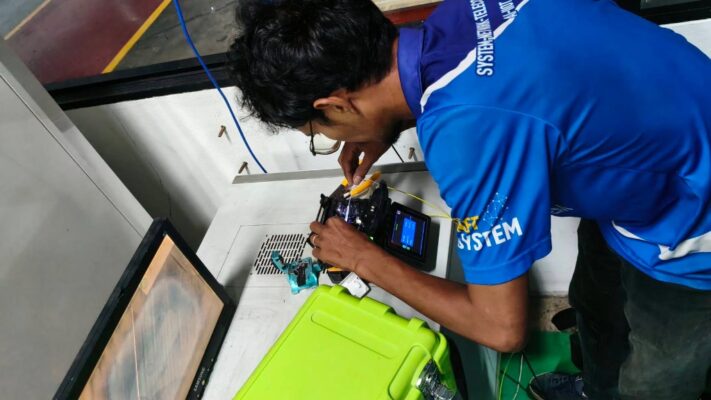
Good fiber work does not end when the cable is laid; the results must be verifiable. We splice with a fusion splicer (see the principles at FOA: Fusion Splicing), test the signal before handover and issue a test report for you to keep as a reference when you expand the system in future. Examples of our real projects:
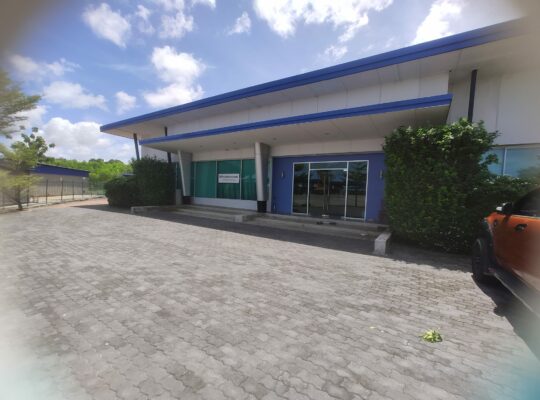
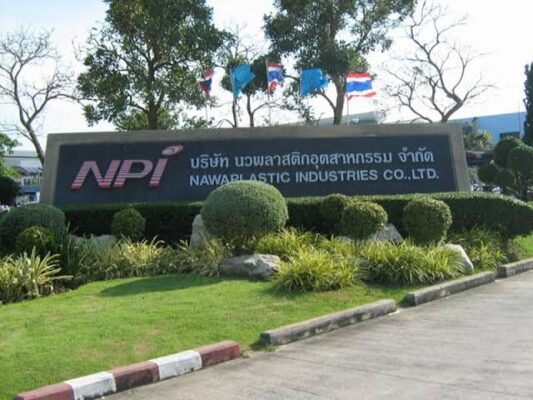
- Fiber optic splicing with a test report at Nawa Plastic, Rayong
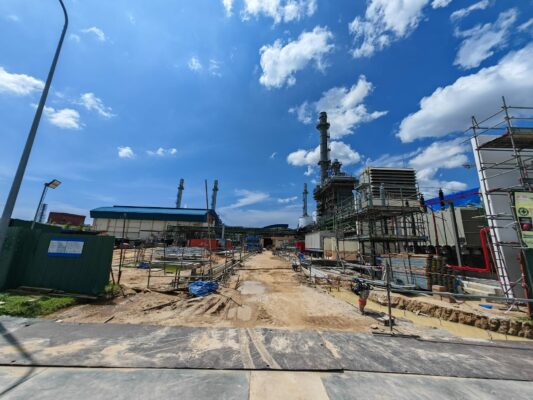
- Fiber optic splicing with a test report at a Rayong power plant
- 144-core fiber optic fusion splicing at The Empire Tower, Pattaya
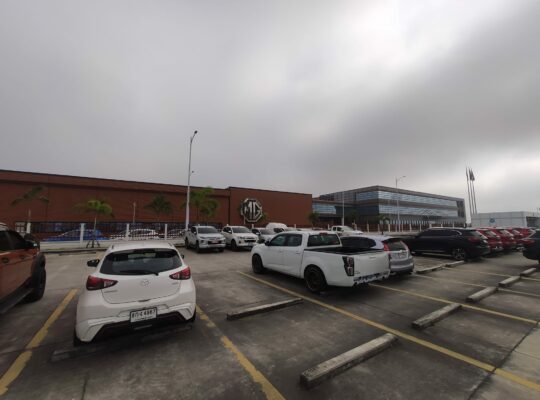
- Fiber optic repair at the MG factory, Chonburi
We handle new installations, broken cable repairs and cable rerouting.
Fiber optic cabling service areas
Our team is based in Pattaya and installs fiber optic cabling for businesses, industry and all types of buildings in the Eastern region. Examples of our work by area:
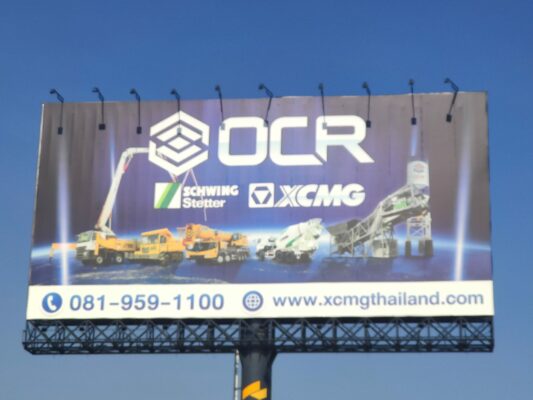
- Pattaya / Bang Lamung: high-rise buildings, hotels and condos, such as The Empire Tower, Mint Mansion and OCR Pattaya
- Si Racha / Laem Chabang: factories, warehouses and office buildings
- Sattahip: buildings and factories in the Sattahip area
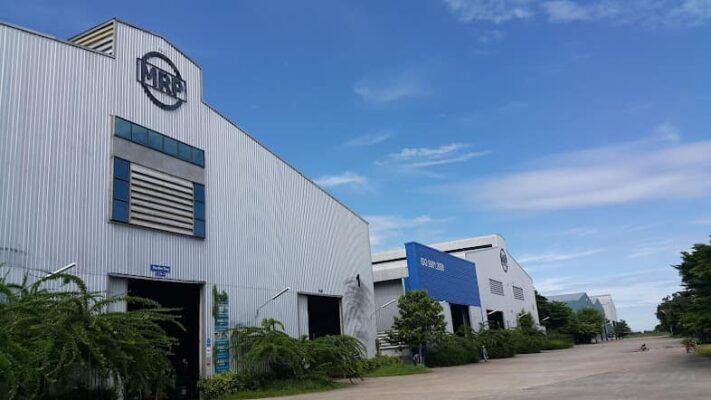
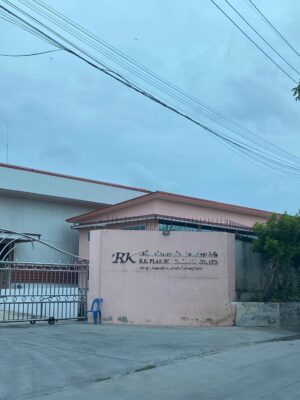
- Chonburi / Amata / Phanat Nikhom: such as Daikin, Celestica, RK Amata Chonburi, NPK Phanat Nikhom and MRP Thailand
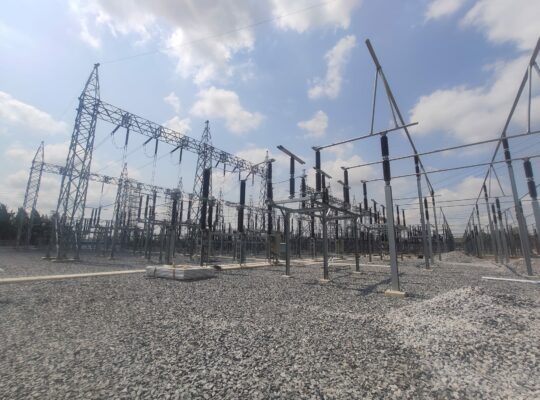
- Rayong / Map Ta Phut / Pluak Daeng: such as SPP Glow power plant, IRPC Clean Power, the Sakura project in Map Ta Phut and U-Tapao Airport
If your site is outside these areas, contact us anyway. We have also worked in Prachinburi, Nakhon Pathom and Samut Prakan.
Our fiber optic installation process
- Site survey to assess the area, distances, connection points and how the system will actually be used
- System design to suit the type of site, such as a factory, hotel, office building or multiple buildings
- Quotation based on distance, number of points, cable type and the complexity of the site
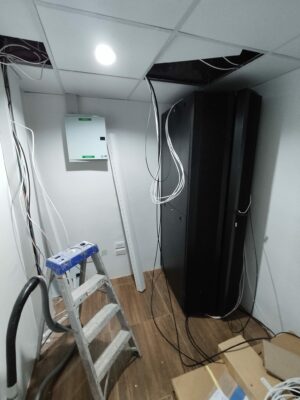
- Installation and cabling, including termination, splicing and tidy cable management
- Signal testing to check system quality before handover
- Handover with usage guidance and advice on future expansion
FIBER OPTIC SOLUTIONS
There are 2 main modes of fiber optic cable:
1. Multi mode transmission
2. Single mode transmission
1. Single mode
Single mode (SM) optical cable is yellow, with a core and cladding of 9/125 μm respectively: a 9-micron core diameter and a 125-micron cladding diameter. Because the core is very small, light travels in a more orderly way, so losses are lower. The maximum data rate is about 2,500 million bits per second per wavelength at 1300 nanometres over distances of up to 20 km. In practice it can be used up to 100 km, with speed decreasing but not below 1,000 million bits per second. Another advantage of single mode (SM) is that it works at a wavelength of 1300 nanometres, where light attenuation is lowest. The glass core is very small and lets light out in only one mode, and the light must travel in a straight line, which allows signals to travel far.
2. Multi mode
Multi mode (MM) optical cable is orange, with core and cladding sizes of 62/125 μm and 50/125 μm respectively, for example a 50-micron core and a 125-micron cladding. Because the core is large, light travels in scattered paths and interferes with itself, so there is a lot of light loss. It can therefore send data no further than 200 metres, at no more than 100 million bits per second at a wavelength of 850 nanometres, and is suitable for use inside buildings only. Its advantage is low cost: the large core is easier to manufacture. Light travels in several modes, each taking a different time, which causes light dispersion (mode dispersion).
Advantages and disadvantages of fiber optic cabling
Advantages
- Fast data transmission
- No electromagnetic interference
- Large amounts of data without bottlenecks
Disadvantages
- More expensive than twisted pair and coaxial cable
- Needs to be installed by people with fiber cabling knowledge and expertise
- Fiber splicing costs are relatively high, while twisted pair and coaxial cable are cheaper
Service from an experienced team and expert technicians
Nice System and Development provides fiber optic cabling installation and fiber termination, as well as all kinds of fiber optic work.
Ask about our
fiber optic cabling installation
📞 Contact us: 033-265-438, 096-246-2324
🌐 Facebook: facebook.com/sysnetpattaya
LINE: @Nicesystem
📍 Location: serving Pattaya, Chonburi, Rayong and nearby areas
Frequently asked questions about fiber optic installation
Which areas do you cover for fiber optic installation?
We work in Pattaya, Chonburi and Rayong, including Bang Lamung, Sattahip, Si Racha, Amata, Pluak Daeng and nearby areas in the Eastern region.
Can you survey the site before quoting?
Yes. A site survey helps us estimate the distance, number of points, cable type and complexity of the job more accurately.
What kinds of work is it suitable for?
Hotels, factories, office buildings, multi-building projects, CCTV, WiFi, IP telephone systems and any work that needs long-distance network connections.
Do you offer splicing and cable testing?
Yes. We terminate, splice and test fiber optic cables to make sure the system is ready for real use.
Should I choose single mode or multi mode?
It depends on the distance and how it will be used. Single mode is usually used for long distances or links between buildings, while multi mode may suit some types of in-building work better.
What kind of business is PON FTTX suitable for?
Businesses that need to distribute signals to many points, such as hotels, office buildings or projects that must support many users and be easy to expand in future.
How is fiber optic cabling priced?
The price depends on the distance, number of cores, cable type (indoor / outdoor / armored), installation method (in conduit, aerial on poles or buried) and the number of terminations or splices. After the site survey we quote materials and labour separately and clearly.
What is the difference between SC and LC connectors?
SC is a larger push-pull connector, common in ODFs and FTTx work. LC is about half the size and is used with SFP modules on switches. If the two ends use different connectors, use an SC-LC patch cord.
Last updated: 1 November 2026 by the Systems Connect team
Recommended articles on fiber optic systems
- What is PON FTTX? A fiber infrastructure guide for businesses
- Fiber optic for business in Pattaya, Chonburi and Rayong
Interested in fiber optic installation in Pattaya, Chonburi or Rayong? Contact us now:
📞 Call: 096-246-2324 (Khun Mai), 033-265-438
📱 LINE: @Nicesystem
📍 Service area: Pattaya, Bang Lamung, Sattahip, Si Racha, Chonburi city, Amata, Pluak Daeng, Rayong and nearby areas
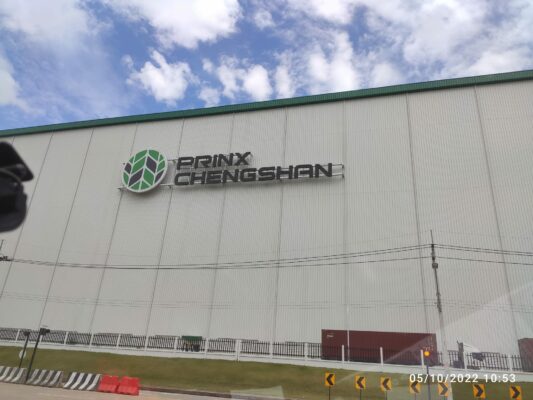
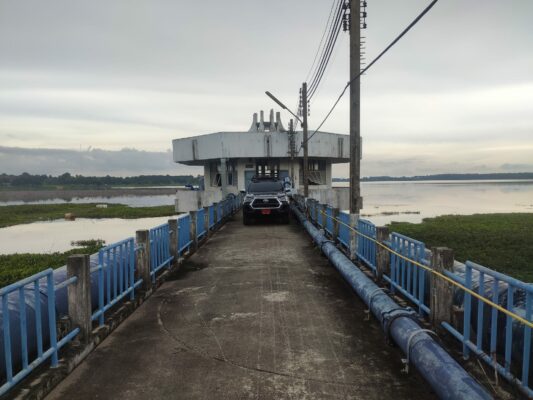
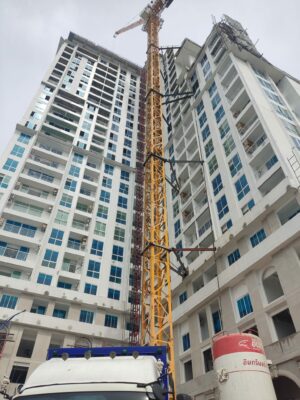
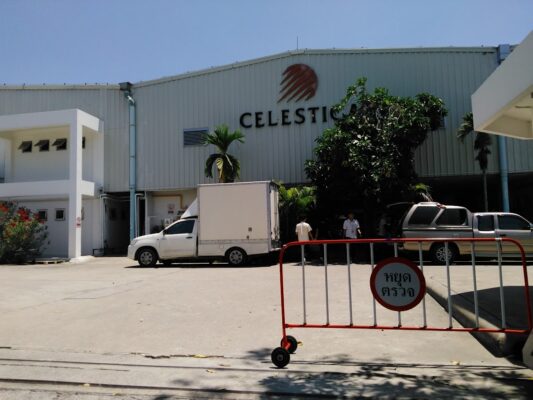
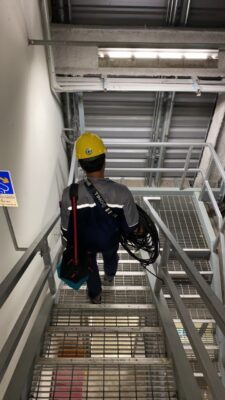
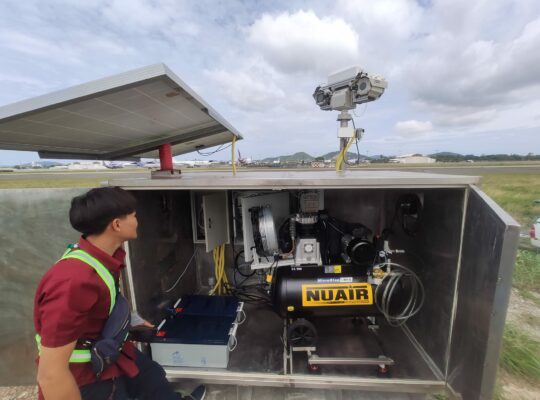
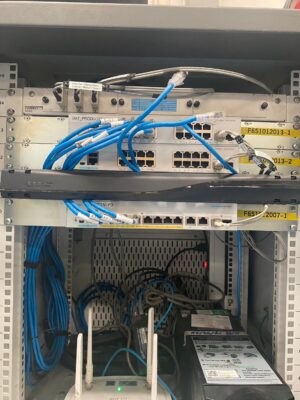
Our fiber optic installation projects
Plan your fiber optic installation
Talk to the Systems Connect team in Pattaya, Chonburi and Rayong. Call 033-265-438 or 096-246-2324, or message us on LINE @Nicesystem.
Contact Us Call 033-265-438 Call 096-246-2324