
Fiber Optic
5 Reasons Businesses in Pattaya, Chonburi & Rayong Need Fiber Optic
Mar
For businesses in Pattaya, Chonburi and Rayong that need a stable internet connection and network, fiber optic for business is core infrastructure. That includes hotels, factories, warehouses, offices and multi-branch shops. Fiber carries data over long distances at high speed, with far less interference than ordinary copper cable.
Which Businesses Need Fiber Optic in Pattaya, Chonburi and Rayong?
Businesses in Pattaya, Bang Lamung, Sattahip, Si Racha, Chonburi city, Pluak Daeng and Rayong often need to connect several points. Typical points are server rooms, offices, CCTV, access control, WiFi and IoT-connected machines. Fiber optic cabling keeps the core system more stable. This matters most when you send CCTV video or link network segments over long distances.
What to Check Before Installing Fiber Optic
- The real distance between buildings or to the server room.
- How many cores to reserve for CCTV, WiFi, PON FTTX and future backup links.
- The cable route: outdoor, indoor, in conduit or on a messenger wire.
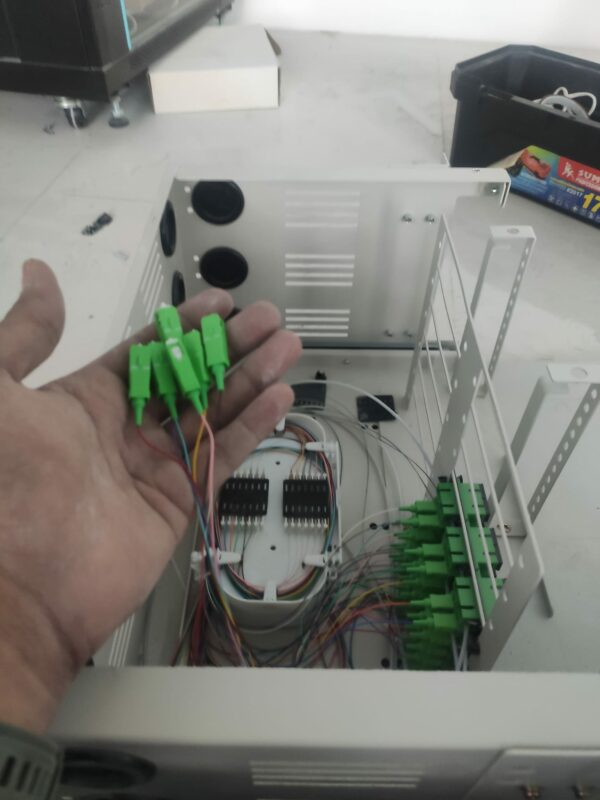
- Connector types such as SC and LC, and the fusion splicing standard.
If you need to distribute the network to many points, read our guides to the PON FTTX fiber network and choosing between Ubiquiti, Grandstream and TP-Link WiFi.
The Eastern Economic Corridor (EEC), which covers Pattaya, Chonburi and Rayong, is a key driver of Thailand’s economy across manufacturing, tourism, services and real estate. Competition here is fierce. Leading businesses are not measured only by size, but by the speed and efficiency with which they manage data.
In a data-driven era, the network is the main artery of the business, and fiber optic is widely recognised as the best technology available. This article gives five key reasons why businesses in Chonburi, Rayong and Pattaya should upgrade to fiber, and how to choose the right system.
What Is Fiber Optic?
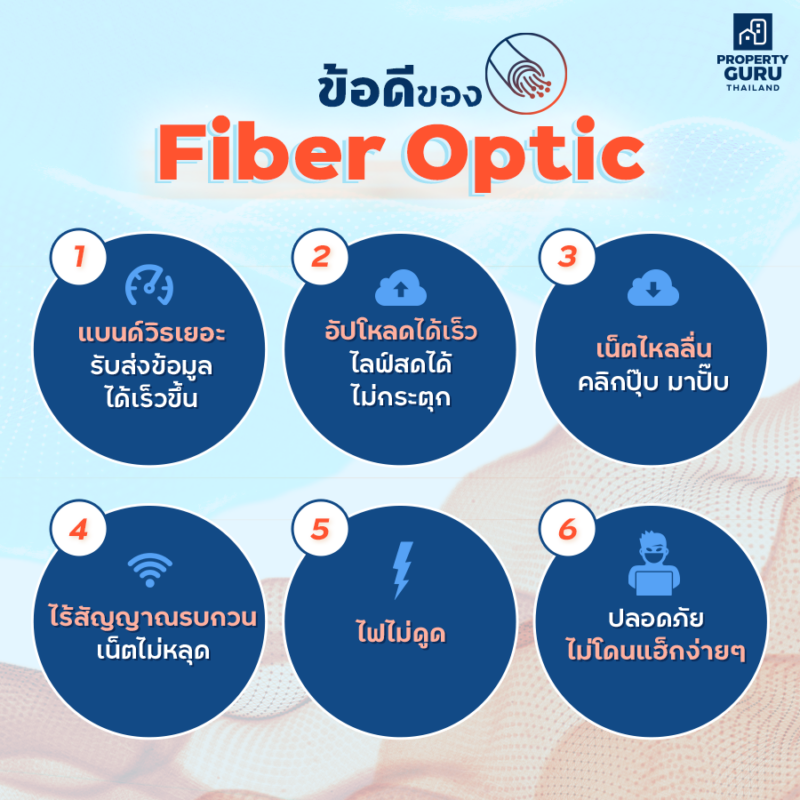
A fiber optic cable is made of extremely pure glass or plastic strands about as thin as a human hair. It carries data as light instead of the electrical signals used in copper cable. Using light makes fiber very fast. It can carry huge amounts of data and travel many times further than copper without the signal dropping out.
For a business, moving to fiber is not just about faster internet. It upgrades your whole IT infrastructure, ready for future technology. For the basics, see how fiber optics work and their types.
5 Reasons Businesses in Pattaya, Chonburi and Rayong Should Switch to Fiber
1. Superior Speed and Bandwidth
Businesses now rely on cloud computing, high-definition video conferencing and large file transfers. Fiber optic offers far more bandwidth than older cabling.
- In Pattaya: leading hotels and high-end entertainment venues need fast internet for many guests connecting to WiFi at once. Fiber helps solve slow or dropping connections and gives guests a better experience.
- In Rayong and Chonburi: factories need to move data quickly between IoT-connected machines and ERP systems. Gigabit fiber keeps operations running smoothly.
2. Maximum Stability and Reliability
Copper’s biggest weakness is electromagnetic interference (EMI). Industrial estates in Chonburi and Rayong are full of heavy machinery that constantly emits it. Fiber carries signals as light, so it is immune to EMI, and bad weather, heavy rain or storms do not affect signal quality. Your network can run continuously with high uptime, greatly reducing the risk of outages.
3. Stronger Data Security
Data is an organisation’s most valuable asset. Copper cable is relatively easy to tap. With fiber, physically tapping the line to steal data is very difficult, and a cut or tapping attempt causes signal loss that monitoring equipment can detect. That is why fiber is a top choice for organisations that need high data security, such as banks, hospitals and research centres in the EEC.
4. Long-Distance Connections
Industrial estates in the East are large. Factories, warehouses and head offices may be several kilometres apart. Standard copper Ethernet is limited to about 100 metres per run, while fiber can carry signals for many kilometres. Linking a large organisation’s network becomes simple and efficient.
5. Long-Term Value and Scalability
Fiber may cost a little more than copper to install at first, but it is much better value over the long term. It withstands the environment, does not corrode and lasts a long time. Most importantly, fiber scales very well. As your business grows, you can often upgrade speed simply by changing the active equipment at each end, without pulling new cable.
How to Choose the Right Fiber System and Equipment
Getting the full potential from fiber is not just about choosing the right cable. You also need a solid network design and capable management equipment.
1. Choose the Right Type of Fiber
- Single-mode fiber: for very long distances (several kilometres), such as links between buildings, factories or branches across Chonburi and Rayong.
- Multi-mode fiber: for cabling inside a building, server room or data centre, with high bandwidth over short distances.
2. Integrate With Enterprise Network Equipment
To get the best from fiber, use network equipment that supports fiber directly, for example:
- A high-performance router: an enterprise router with SFP+ ports, such as the MikroTik CCR2004-16G-2S+ or similar models. It lets you run bridge mode for high-speed internet and manage VLANs securely across an organisation or hotel, reducing bandwidth contention.
- An IP-PBX phone system: with a stable fiber network in place, consider replacing an old analogue PABX with an IP-PBX. It carries voice over the data network, avoids duplicate phone cabling and adds modern features. Examples are forwarding calls to mobiles and free calls between branches over your own network. See PABX vs IP-PBX.
Why Installation and Splicing Matter Most
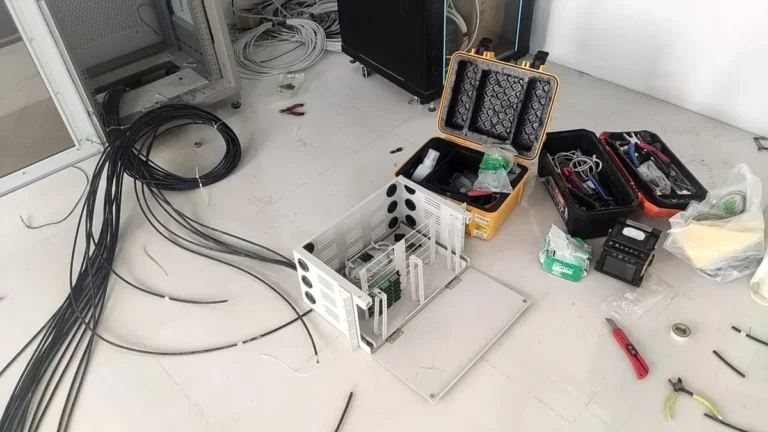
You can buy the best fiber cable and the most expensive equipment, but if the system is installed by non-specialists, performance can suffer badly. Joining fibers (fiber splicing) needs high-precision tools and skilled technicians to keep loss at each joint as low as possible.
Choosing a contractor: businesses in Chonburi, Rayong and Pattaya should choose a company with direct local experience and a track record of industrial or large-scale cabling projects. A local specialist such as Nice System (Systems Connect) can make sure your cabling, splicing and network configuration follow international standards. You also get warranty support, fast after-sales service and quick on-site response in an emergency.
Fiber Optic Examples in Pattaya, Chonburi and Rayong
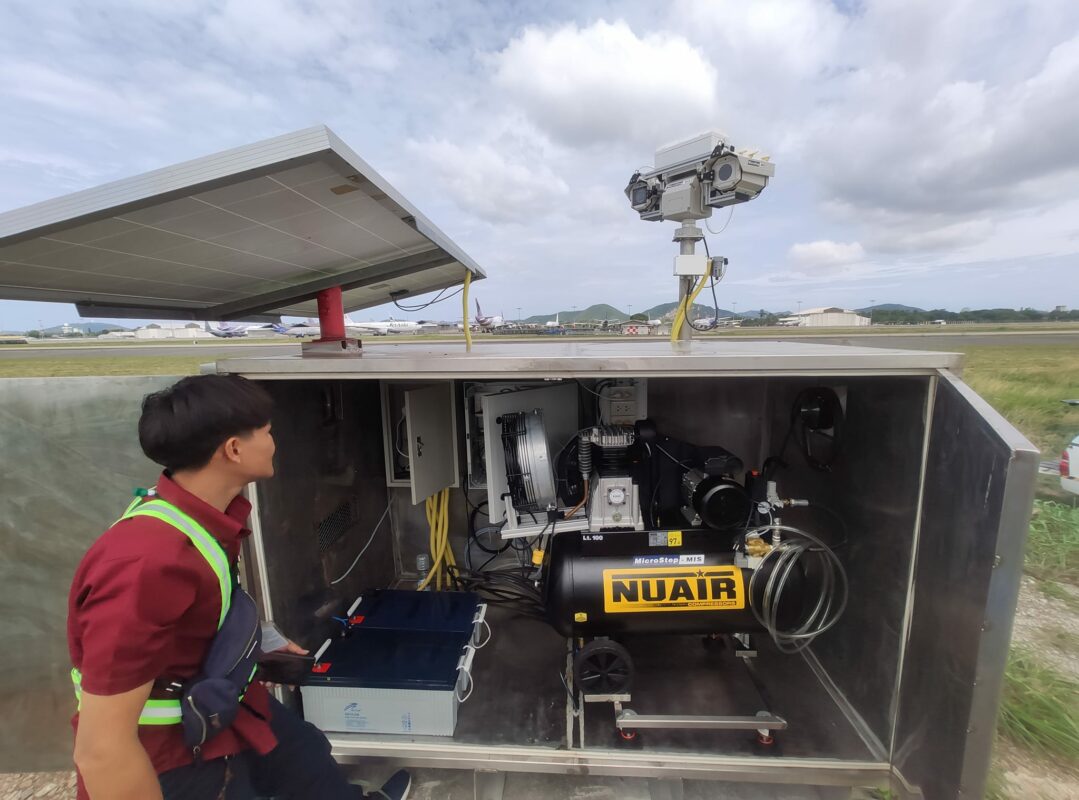
Hotels in Pattaya often use fiber to link CCTV across several floors, guest WiFi, POS and the server room, so data flows reliably. Factories in Chonburi and Rayong use fiber as the backbone between production buildings, warehouses, guard houses and offices, so the network, CCTV, access control and IoT work together without interruption.
Planning for Future Expansion
- Install more cores than you need today, for future cameras and WiFi.
- Choose outdoor, indoor or armoured cable to suit the real route.
- Place splice points, patch panels and labels so faults are easy to trace.
- Test loss after installation to confirm signal quality.
Good design looks beyond distance. Consider joint locations and risks from water, heat and rodents, and avoid running fiber alongside power cables carelessly. These factors affect stability and long-term repair costs.
FAQ Before Installing Fiber Optic
Which buildings suit fiber optic?
Buildings that need long-distance links between server rooms, offices, factories, warehouses, guard houses and many CCTV points. It is especially useful where standard LAN cable cannot reach or there is heavy interference.
Single-mode or multi-mode?
For long links between buildings or the main backbone, single-mode is usually chosen because it handles distance better. Multi-mode suits short runs inside a building or data room. Decide based on distance, SFP equipment, budget and expansion plans.
What should be tested after installation?
- Loss on each core.
- Labels at both ends match.
- Patch cords and SFP modules in use.
- Real traffic for the network, CCTV, WiFi and critical systems.
- A recorded cable map for future maintenance.
Conclusion
In the digital economy, doing business in the EEC, in Pattaya, Chonburi and Rayong, demands speed, accuracy and security. Fiber optic is no longer just an option. It is a business necessity that raises your competitiveness and supports cloud, IoT, smart factories and advanced security.
A standards-compliant fiber network with well-managed equipment is one of the best investments your business can make, paying back in smoother operations and sustainable growth.
Planning a fiber network in Pattaya, Chonburi or Rayong? See our fiber optic installation service and network systems, call 033-265-438, 096-246-2324, LINE @Nicesystem (include the @), or contact us online.