
Fiber Optic
How Fiber Optics Work and Their Types
Sep
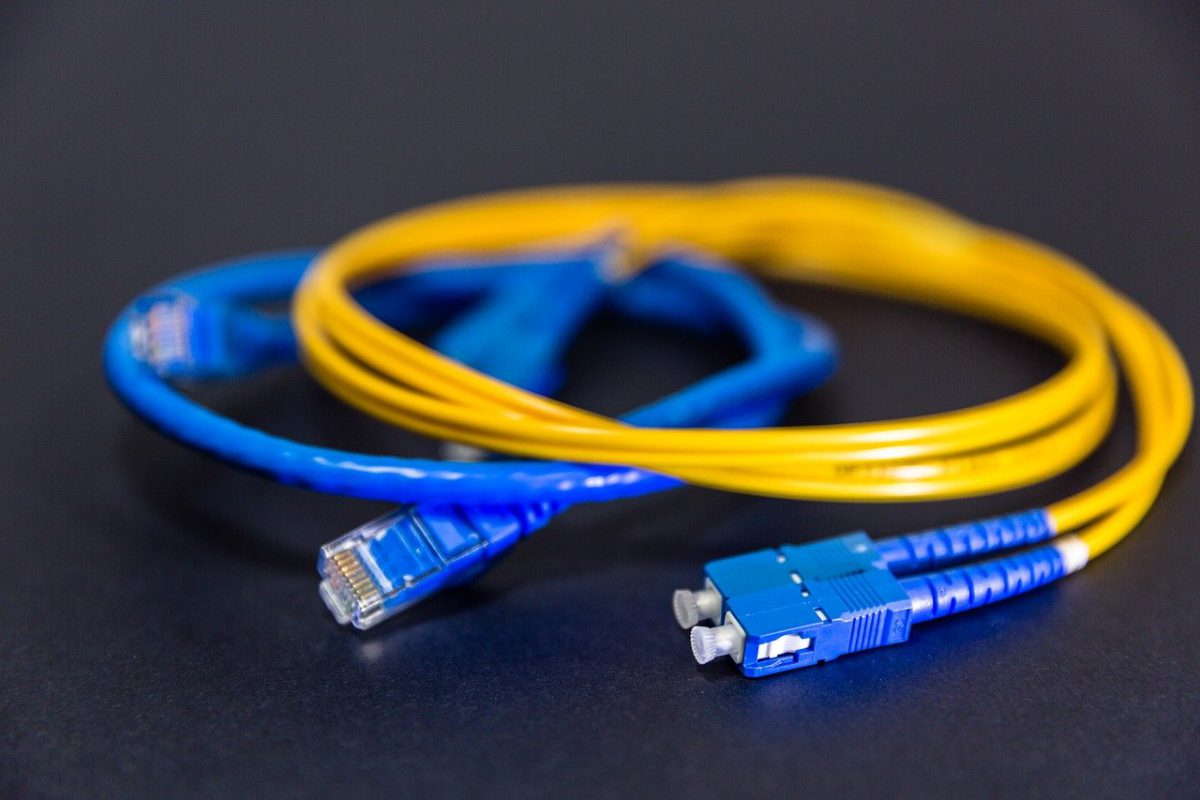
Fiber optic cables are communication cables that transmit data as pulses of light through tiny glass or plastic fibers. Consequently, they support exceptionally high speeds, long transmission distances, and superior immunity to electrical noise and interference compared to copper cables. They are ideal for enterprise networks, industrial facilities, long-distance CCTV surveillance, and high-speed internet infrastructure.
How Fiber Optics Work
A transmitting device converts electrical data into light signals, which are then transmitted through the fiber core using the principle of total internal reflection. Upon reaching the destination, an optical receiver converts the light pulses back into electrical data. This enables ultra-fast data transmission with minimal signal loss compared to conventional cabling.
Types of Fiber Optic Cables
Single-mode Fiber
Single-mode fiber is ideal for long-distance transmissions, such as connecting multiple buildings, industrial plants, or serving as an enterprise core backbone. It utilizes a very small core diameter and is typically deployed over distances spanning several kilometers.
Multi-mode Fiber
Multi-mode fiber is suitable for short to medium distances, such as within a single building or a data room. In certain scenarios, equipment costs are lower, but its transmission distance is more limited compared to single-mode fiber.
Advantages of Fiber Optics
- High bandwidth capacity, ideal for massive volumes of data
- Long transmission distances with minimal signal attenuation (loss)
- Immune to electromagnetic interference (EMI)
- Enhanced security, as optical signals are significantly harder to tap compared to copper wiring
- Ideal core backbone for enterprise networks, CCTV surveillance, and industrial systems
How to Choose Cables and Equipment
Selecting the right cable requires evaluating transmission distance, core count, indoor vs. outdoor specifications, connector termination or fusion splicing methods, patch panels, SFP optical modules, and optical loss testing standards following installation. If deployed for multi-building CCTV or campus Wi-Fi networks, the infrastructure should be designed in coordination with Network System Services and CCTV Surveillance Systems from the outset.
Fiber Optic Installation Services
SystemsConnect provides comprehensive fiber optic design, cabling, splicing, connectivity, and testing services for businesses in Pattaya, Chonburi, Rayong, and surrounding areas. Learn more at our Fiber Optic Installation Services.
Conclusion
Fiber optics represent the critical backbone infrastructure for modern communication systems — essential for organizations seeking high speed, reliable stability, and future-proof scalability. Effective system design must begin by considering actual physical distance, data throughput demands, and endpoint equipment specifications.
Interested in POS system installation in Pattaya, Chonburi, and Rayong? Contact us today:
📞 Tel: 096-246-2324 (Khun Mai), 033-265-438
📱 Line: @Nicesystem
📍 Service Areas: Pattaya, Bang Lamung, Sattahip, Si Racha, Chonburi City, Amata Industrial Estate, Pluak Daeng, Rayong, and surrounding areas