
Solar & Energy
TOU Meters in Thailand: How to Apply for EV Home Charging
Nov
If you have just bought an electric car or are about to install a home charger in Thailand, someone has probably told you to “get a TOU meter so you can charge cheaply at night”. The follow-up questions are harder: how is TOU billed, does the meter have to be replaced, what does it cost, and is it actually worth it?
This guide is based on official documents from the Provincial Electricity Authority (PEA), which supplies Chonburi, Pattaya and Rayong, and every figure links to its source. Use it to plan before you book an EV charger installation at home or at work.
What Is a TOU Meter?
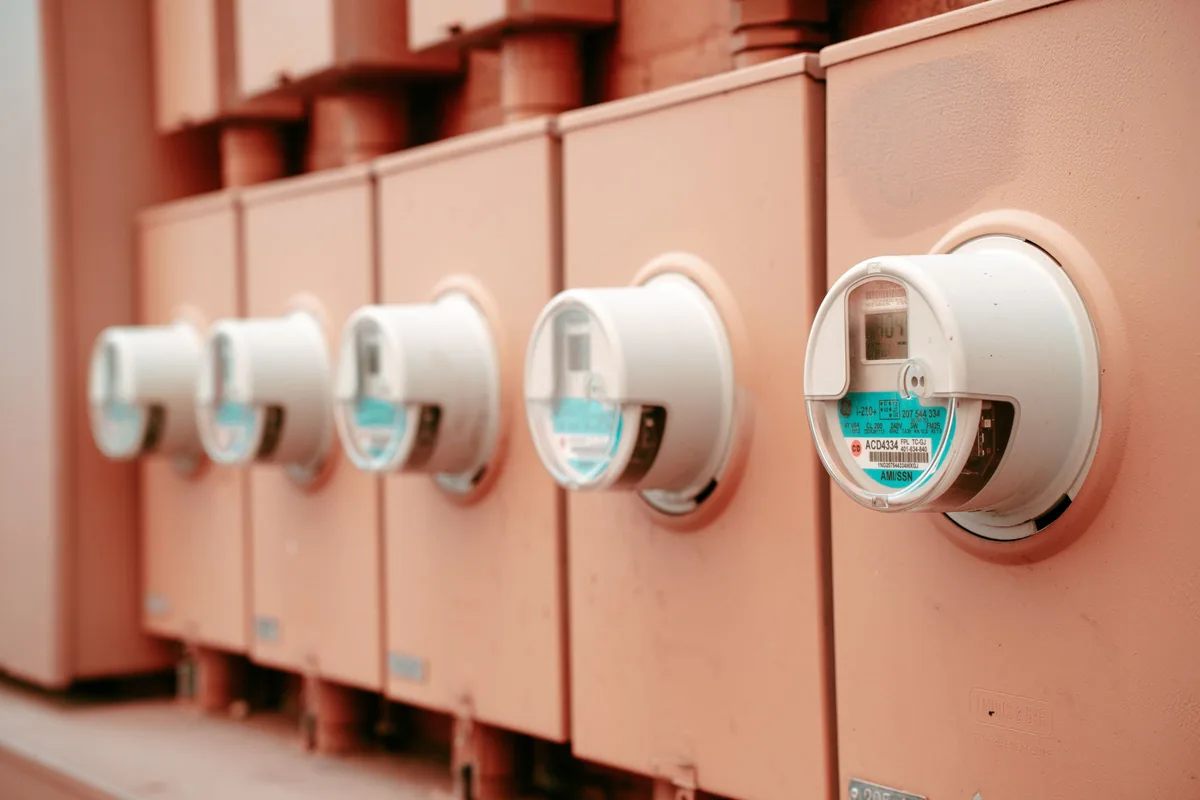
TOU stands for Time of Use. It is a tariff where the price per unit depends on when you use electricity. Peak hours, when demand on the grid is high, cost more. Off-peak hours, when demand is low, cost less. A TOU meter records which period each unit was used in.
A standard home meter is billed on a progressive rate: the more units you use in a month, the more the later units cost, regardless of the time of day.
For EV owners the difference matters, because a single charge uses dozens of units. If you can move most charging into off-peak hours, you pay less per unit than on the standard rate.
PEA TOU Rates and Peak/Off-Peak Hours
According to the PEA electricity tariff document (effective from the September 2026 billing month), the residential TOU rate (type 1.2.2, below 22 kV) is:
| Item | Rate (excluding Ft and VAT) |
|---|---|
| Peak energy charge | 5.7982 baht/unit |
| Off-peak energy charge | 2.6369 baht/unit |
| Monthly service charge | 24.62 baht/month |
Time periods in the PEA document
- Peak: 09:00–22:00, Monday to Friday (including Royal Ploughing Day when it falls on a weekday)
- Off-peak: 22:00–09:00 Monday to Friday, plus all day on Saturdays, Sundays, National Labour Day and normal public holidays (substitute holidays not included)
For comparison, the same document lists the standard residential rate for homes using more than 150 units a month (type 1.1.2) as 3.0000 baht for units 0–200, 4.1584 baht for units 201–400 and 4.3583 baht from unit 401, with a 24.62 baht monthly service charge (also excluding Ft and VAT).
A simple example. Charging 10 units a day off-peak costs about 10 × 2.6369 = 26.37 baht in energy charges. The same 10 units at peak would cost 10 × 5.7982 = 57.98 baht (before Ft and VAT). In other words, TOU only pays off if you really do most of your charging off-peak.
Important: once you switch to TOU, everything on that meter is billed by time of day, not just the car. If your household uses a lot of power on weekday daytimes, for example air-conditioning while working from home, those units cost 5.7982 baht, more than any standard tier. Look at your usage pattern before you decide. Solar panels that cover daytime load can help reduce peak consumption; see our guide to on-grid, off-grid and hybrid solar.
Can You Still Get a Second Meter for EV Charging?
Many people in Thailand search for a “second circuit” or “second meter”: a separate meter just for the charger, so the house stays on the standard rate while the car is billed on TOU.
However, as reported by Thai PBS, PEA cancelled its rules for installing a second meter for EV charging for residential and small business customers, effective 1 September 2024. Customers who already had one keep it, but new applicants must choose between the standard rate and TOU on a single meter.
What you still need, and what people sometimes also call a “second circuit”, is a dedicated circuit for the charger. That is a safety requirement for the installation and has nothing to do with the number of meters (see below). Utility rules can change, so confirm with your local PEA office or the PEA Contact Center on 1129 before applying.
How to Apply for a TOU Meter, and What It Costs
- Check your meter and main cable. Find out the size of your current meter, whether it is single-phase or three-phase, and whether it can carry the charger on top of your existing load. If not, you may need to upgrade the meter at the same time.
- Prepare documents. PEA generally asks for a copy of the ID card, a copy of the house registration for the property, and proof of ownership or the right to occupy the premises. Foreign nationals provide a copy of their passport. If someone applies on your behalf, they need a power of attorney with a duty stamp and a copy of their own ID (based on the PEA customer guidelines). Ask your local office whether anything else is needed.
- Apply to PEA. Apply at your local PEA office or through PEA’s online channels and state that you want the TOU rate.
- Pay the TOU service fee. Under the PEA announcement on service fees for TOU customers (effective 23 February 2026), the fee is 3,300 baht for a low-voltage single-phase meter and 3,750 baht for a low-voltage three-phase meter (excluding VAT).
- Meter replacement. Once approved, PEA schedules the meter change and starts billing on TOU.
According to the notes in PEA’s tariff document, TOU is an optional rate. After at least 12 months on TOU, you can ask to switch back to the standard rate.
If you live in Bangkok, Nonthaburi or Samut Prakan, your supplier is the Metropolitan Electricity Authority (MEA). The residential TOU energy charges shown on the MEA website are the same, but follow MEA’s own procedures and meter fees.
Checking Your Electrical Panel Before Installing a Wall Charger
Whichever tariff you choose, the charger must be installed safely. PEA’s electrical installation standard for EV supply equipment (residential) sets out key requirements, including:
- The circuit feeding the charger must be separate from other loads, and each circuit may supply only one charger.
- The circuit cable must be rated for at least 1.25 times the charger’s current.
- A type B residual current device (RCD) rated 30 mA or less is required, or a type A/F RCD combined with DC fault detection where the standard allows it.
- Proper earthing is required, and outdoor installations must use the wiring methods the standard specifies.
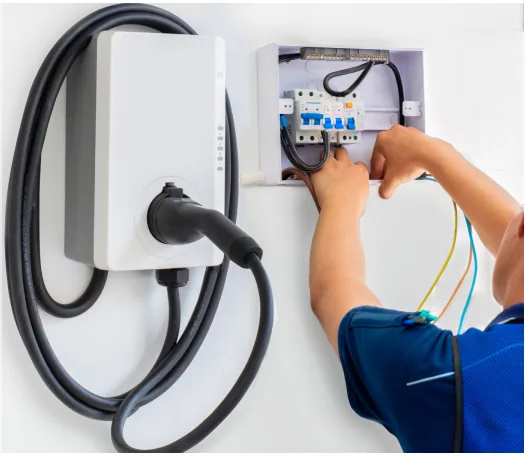
Also choose a mounting position where the cable reaches the car’s charging port comfortably, away from standing water and direct rain, with room for maintenance.
Installation Cost with Systems Connect
For homes, installation (excluding the charger itself) typically starts at around 12,000–15,000 baht, depending on the cable distance from the main panel and the charger specification. We survey the site and check the meter, main cable and panel before recommending a solution. See our EV charger installation service for details.
For buildings and factories planning several charging points, it helps to look at overall energy use at the same time, for example with energy monitoring to track load and usage times, or alongside solar panels for SMEs.
FAQ
How much does electricity cost on a TOU meter?
For PEA residential customers (type 1.2.2), peak is 5.7982 baht/unit, off-peak is 2.6369 baht/unit, plus a 24.62 baht monthly service charge, all excluding Ft and VAT.
How much does it cost to switch to a TOU meter?
Under the PEA announcement effective 23 February 2026, the fee is 3,300 baht for a low-voltage single-phase meter and 3,750 baht for three-phase, excluding VAT. A meter upgrade may cost extra.
Can I still get a second meter just for my EV?
According to news reports, PEA cancelled the second-meter scheme for residential and small business customers from 1 September 2024. Check with your local PEA office before applying.
Can I switch back from TOU?
Yes. After at least 12 months on TOU, you can request a return to the standard rate under PEA’s conditions.
Tariffs and fees in this article are taken from PEA and MEA documents as of November 2026 and may change. Please confirm with your electricity provider before deciding.
Planning a home or workplace EV charger? Contact us: 📞 Call 033-265-438 or 096-246-2324 📱 LINE: @Nicesystem 🔗 Service details: EV charger installation in Pattaya, Chonburi and Rayong