
Solar & Energy
On-Grid vs Off-Grid vs Hybrid Solar: Which Should You Choose?
May
On-grid, off-grid and hybrid are the three main types of solar system. Every business should understand them before investing, because each has different costs, operation and best uses. On-grid is best for cutting daytime electricity bills. Off-grid suits places with no mains power. Hybrid suits sites that want to cut bills and have battery backup.
On-Grid vs Off-Grid vs Hybrid Solar: Which Should You Choose?
For factories, offices, restaurants and SMEs that use a lot of power during the day, on-grid is usually the best value. The investment is simple and payback is easier. For remote locations without power, off-grid fits better, for example water pumps, outdoor CCTV or communication points. Choose hybrid when the business needs battery backup for critical loads such as servers, network equipment, POS or security systems.
Before choosing a system size, assess your real electrical load and usage pattern. Then decide whether your goal is lower bills, backup power or a more reliable supply. SMEs can also read our guide to solar panels for SMEs to assess value before installing.
How the Three Systems Differ
In recent years, solar has become a major option for homes, offices and factories. Electricity prices have tended to rise, while solar equipment has become more efficient and easier to get. The question owners and managers always ask is the same: on-grid, off-grid or hybrid, which is best value?
The right answer is not that one system is best for everyone. It is the system that best fits your usage pattern and goals. Each works differently, especially in how it connects to the utility grid, whether it stores energy in batteries, and whether it can supply power during an outage.
If cutting your monthly bill quickly matters most, one system may fit. If business continuity during outages matters more, another is clearly better. A good decision always starts with understanding what your site really needs.

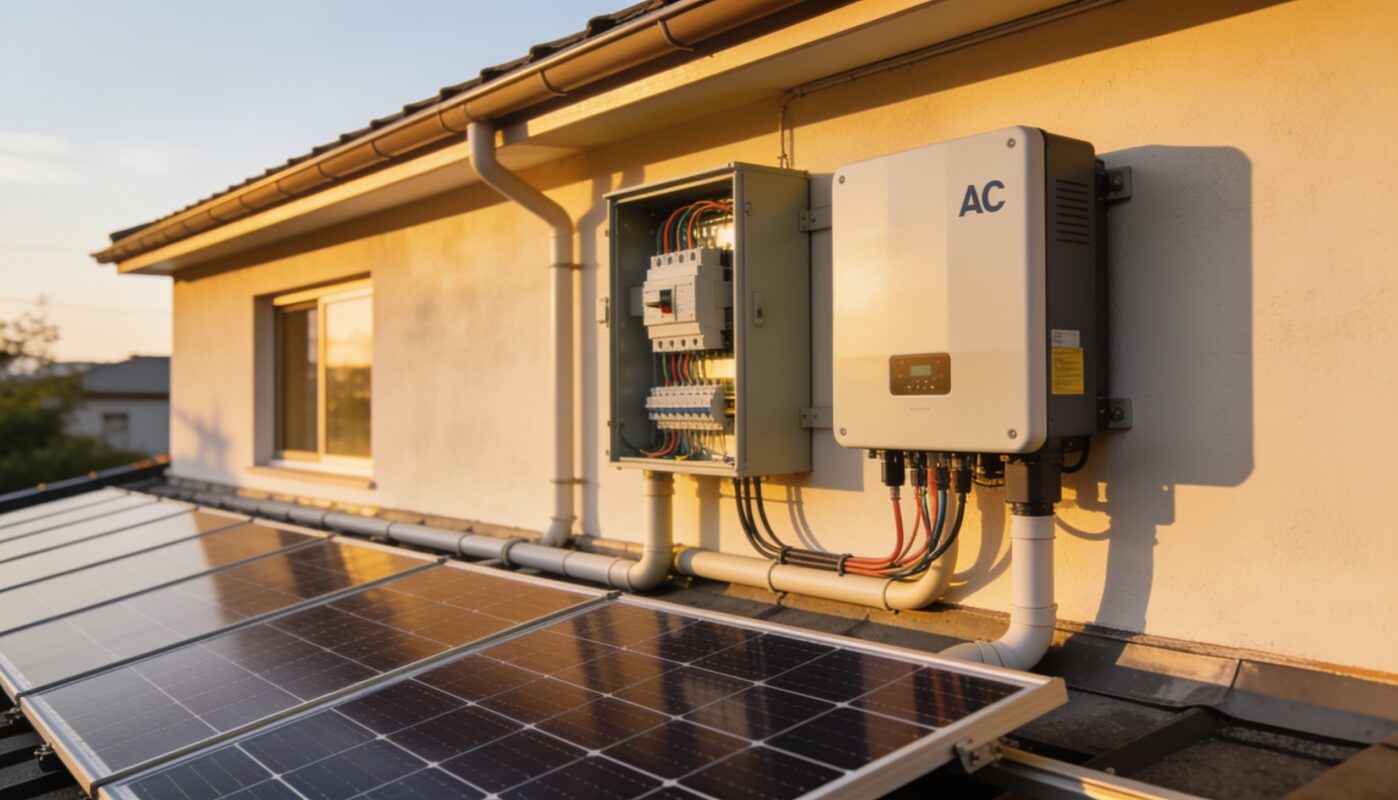
On-Grid Solar: Focused on Lower Electricity Bills
An on-grid system connects to the normal utility grid. When the panels generate power, it goes to the loads in the home or building first. If solar output is not enough, the system automatically draws extra power from the grid, so supply stays continuous.
On-grid is simpler than battery systems, so the upfront cost is lower. Payback is often faster where daytime use is high, such as offices, day-shift factories, shops and homes occupied during the day.
A standard on-grid system has no backup during a grid outage, though. The inverter is designed to stop supplying power for the safety of the grid. If outages hurt your operation badly, consider a hybrid system with batteries.
Advantages of On-Grid
- Relatively low upfront cost compared with battery systems.
- Ideal for cutting monthly bills.
- Easier to maintain in the long run.
- Well suited to cities and areas with a stable supply.
Limitations of On-Grid
- No backup power during outages (in a standard design).
- Financial return depends on how much power you use during the day.
- If most of your use is at night, savings are lower.
Off-Grid Solar: For Sites Without Mains Power
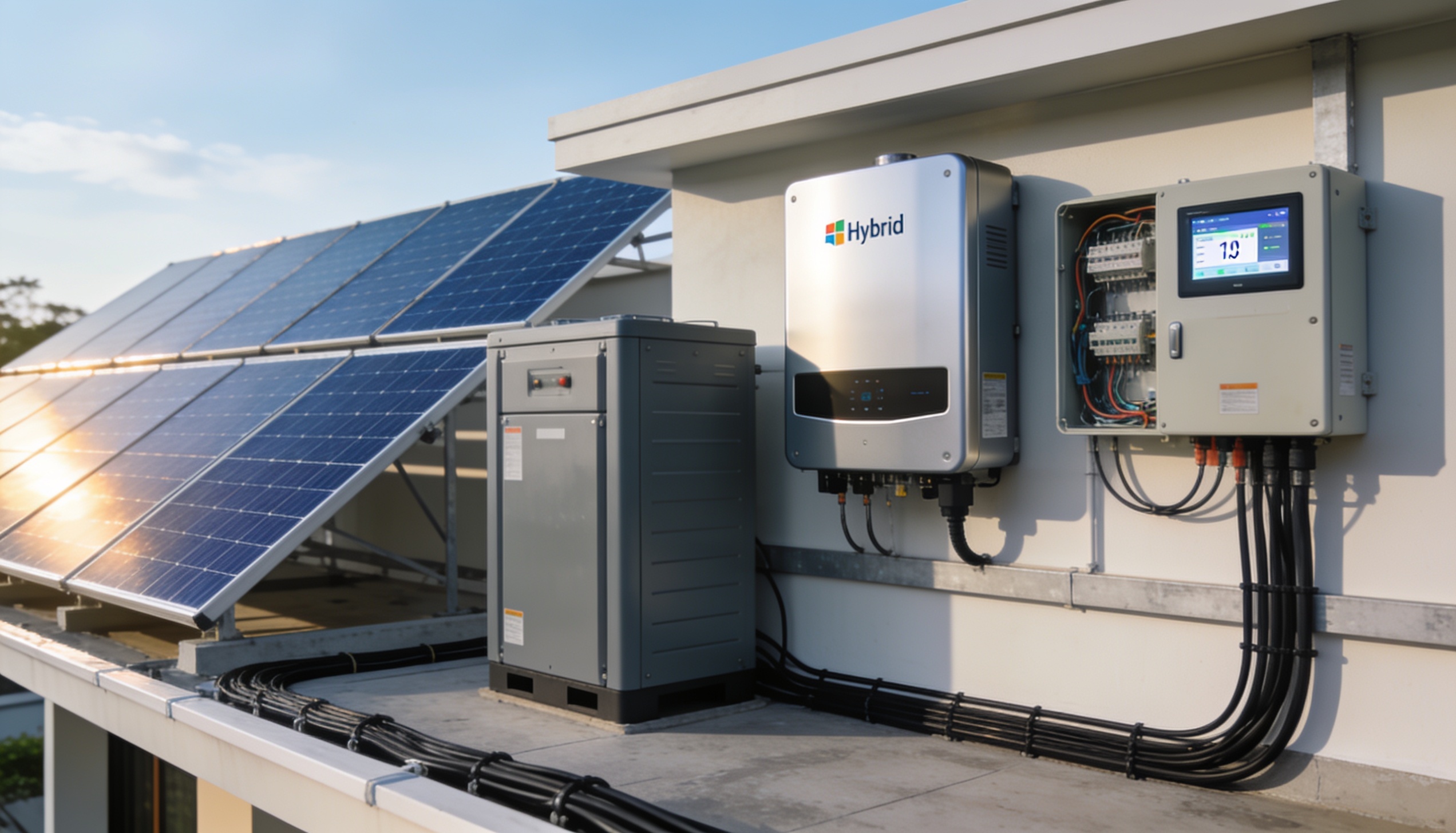
An off-grid system generates and uses electricity independently, with no connection to an external grid. It suits remote areas the grid does not reach: hillside farms, island resorts, agricultural pumping points, communication stations, or temporary projects where running a long power line is not worth it.
Solar power feeds the loads directly, and any surplus is stored in batteries for use at night or when there is not enough sun. The battery is therefore the heart of an off-grid system, driving its cost, stability and lifespan.
You gain a high degree of energy independence and no worries about grid outages. The challenge is precise design. If the load is underestimated, or there is no allowance for several rainy days in a row, the system may run short at times.
Advantages of Off-Grid
- Works with no utility power at all.
- Provides energy security for specialised sites.
- Ideal for infrastructure far from the grid.
Limitations of Off-Grid
- Higher upfront cost than on-grid.
- Battery capacity must be matched carefully to real use.
- Ongoing maintenance and future battery replacement costs.
Hybrid Solar: Savings Plus Backup Power
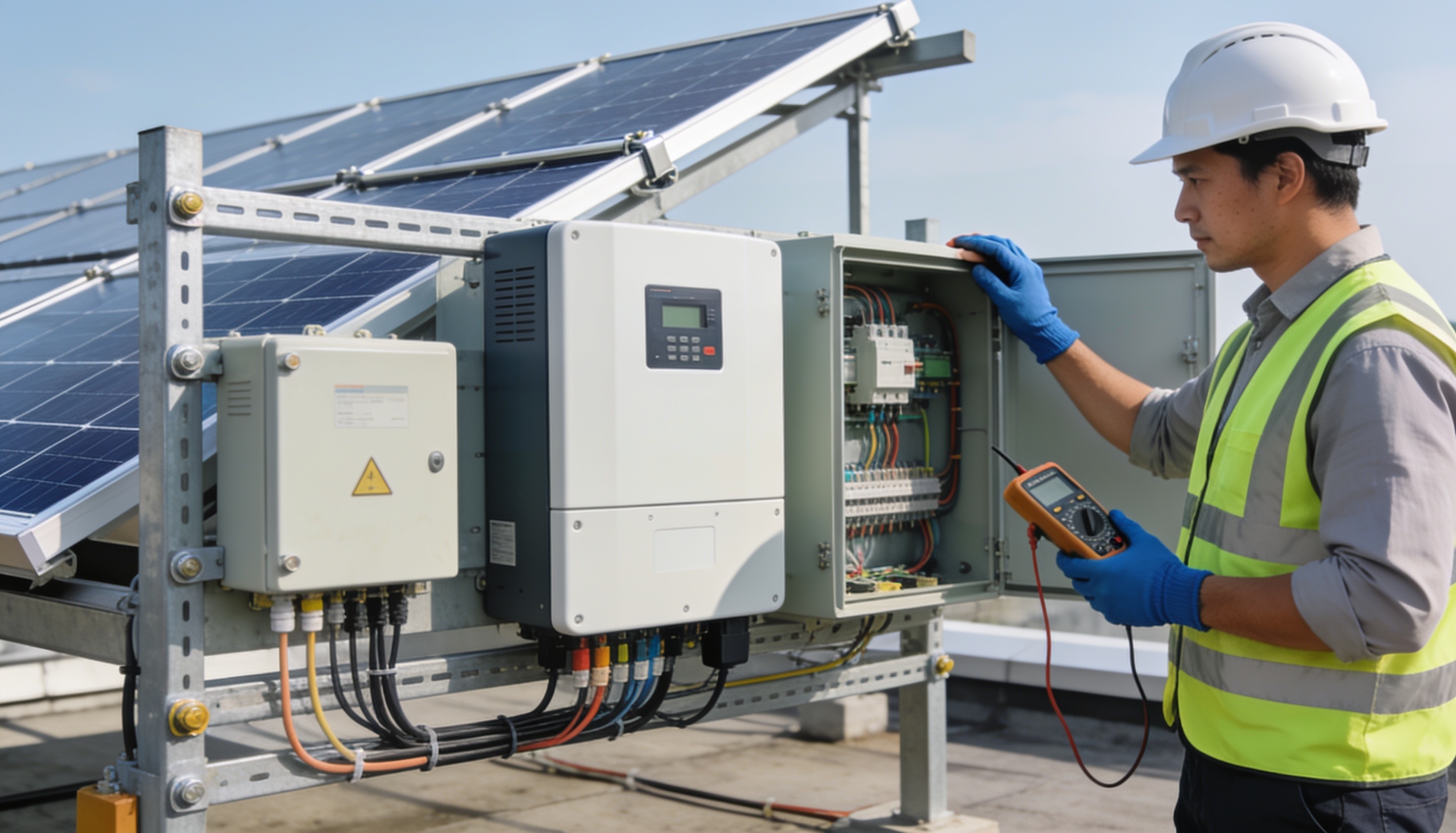
A hybrid system combines on-grid and off-grid. It connects to the grid but also has batteries for backup. The system manages energy sources in a set order: for example, solar first, then battery, then grid power when needed.
Hybrid is very flexible. It suits organisations that want both lower bills and a continuous supply: offices with servers, factories with critical loads, refrigerated shops, hospitals, clinics, and homes with equipment that must run all the time.
Hybrid costs more upfront than on-grid. In many cases, though, the losses from just a few outages can exceed the price difference. Assess the cost of outage risk before deciding.
Advantages of Hybrid
- Cuts electricity bills like any solar system.
- Backup power for critical loads during outages.
- Energy priorities can be adjusted to your organisation’s energy policy.
Limitations of Hybrid
- Higher upfront cost than on-grid.
- More complex, so it needs an experienced design team.
- Batteries and controls need proper maintenance.
Quick Comparison: On-Grid vs Off-Grid vs Hybrid
| Feature | On-grid | Off-grid | Hybrid |
|---|---|---|---|
| Grid connection | Yes | No | Yes |
| Batteries | Usually none | Required | Yes |
| Backup during outages | No (standard design) | Yes | Yes |
| Upfront budget | Low | High | Medium to high |
| Complexity | Low | Medium | High |
| Best for | Lower bills | Sites without power | Lower bills + backup |
Installation Cost and Long-Term Expenses
Many buyers compare solar only on “price per kilowatt”, which gives an incomplete picture. The real project cost also includes equipment quality, installation standards, electrical protection, warranties and long-term maintenance.
For on-grid systems, most of the cost is panels, inverter and installation. Off-grid and hybrid systems add batteries and control equipment. That raises the upfront price but buys flexibility and continuity of supply.
The right way to look at it is total cost of ownership (TCO), together with the payback period and business risk. For example, if an outage that stops your production line for an hour causes heavy losses, a hybrid system may give better overall value despite the higher installation cost.
Sizing the System Correctly
There is no single formula for every home or factory, because usage patterns differ widely. Base the design on real data, especially your load profile over the day. The basic steps are:
- Collect at least 12 months of electricity bills.
- Analyse peak usage times and critical loads.
- Assess the installation area, orientation and shading.
- Set a clear goal: lower bills or backup power.
- Compare several options with financial projections.
For battery systems, design for the number of backup days you need and allow for low-sun weather. This avoids batteries running down quickly or not charging enough.
Choosing for Homes, Factories and Businesses
Homes in the City
If mains power is fairly stable and the main goal is saving money, on-grid is usually the right starting point. If the home has critical equipment that must keep running, hybrid fits better. Examples are security systems, internet or medical equipment.
Offices and Shops
Daytime loads are already high, so on-grid clearly pays off, especially where air conditioning and lighting run all day. If the area has a history of voltage drops or frequent outages, consider hybrid and put critical loads on a backup circuit.
For sites in Pattaya, Chonburi and Rayong that want lower bills and a detailed assessment, see our solar installation service to compare designs, equipment and an on-site survey before you decide.
Industrial Plants
Factories should design from real energy data, not just the average monthly bill, because machine operating patterns directly affect value. Some factories choose a large on-grid system to cut bills, and add backup only for critical points to balance the investment.
Remote Sites
Without grid power, off-grid is the main option. Pay special attention to battery quality, the control system and the maintenance plan, because the system must be fully self-sufficient. Our guide to types of batteries can help you choose.
Common Mistakes Before Installing
- Choosing the cheapest offer without checking equipment quality and after-sales service.
- Not analysing load by time of day, so the system size does not match real use.
- Not assessing the roof structure, which risks safety problems and later repairs.
- Ignoring maintenance, so performance drops faster than it should.
- Not planning for outage risk, especially in businesses with critical loads.
These mistakes are easy to avoid. Start from real data, use an experienced installer, and set system KPIs from the start. Useful KPIs are a monthly savings target, an availability target and a quarterly performance check.
FAQ
If I only want to save money, which system should I start with?
Usually on-grid, because the investment is lower and payback is faster where daytime use is high.
Does off-grid always need batteries?
Yes. The system must store energy for times when the panels do not produce, such as at night or during long rainy spells.
Is hybrid suitable for an ordinary home?
Yes, if the owner wants both lower bills and backup power, especially when a continuous supply is important.
Do solar panels need frequent maintenance?
Schedule regular checks and clean the panels as the environment requires, so the system keeps full performance for the long term.
How do I know how many kilowatts to install?
An accurate answer must come from analysing your real electricity use, not a fixed formula based on building size.
Summary: Which System Is Right for You?
- On-grid is best when the main goal is lower electricity bills and the grid supply is stable.
- Off-grid is best when the site has no power, or a grid connection is not worth the cost.
- Hybrid is best when you want both savings and the confidence of backup power.
The best system is not the most expensive one. It is the one that matches your usage pattern, budget and acceptable level of risk. Planned correctly from the start, solar is an investment that pays back both financially and in long-term energy security.
What to Check Before Choosing a Solar System
Before choosing on-grid, off-grid or hybrid, be clear about your electrical load, when you use power, the installation area, the inverter, the batteries and monitoring. Each system differs in strengths, cost, maintenance and continuity of supply. A real site assessment helps you choose the right size: not so small that savings are minimal, and not bigger than you actually need.
Planning solar in Pattaya, Chonburi or Rayong? See our solar cell installation service, call 033-265-438, LINE @Nicesystem (include the @), or contact us online. Service area: Pattaya, Bang Lamung, Sattahip, Si Racha, Chonburi city, Amata City, Pluak Daeng, Rayong and nearby areas.
Pingback: Types of Batteries Compared: LiFePO4, AGM, Gel & More
Pingback: Solar Panels for SMEs in Pattaya, Chonburi & Rayong