
Solar & Energy
Types of Batteries Compared: LiFePO4, AGM, Gel and More
May
“What types of batteries are there?” is a great starting question for anyone planning a power system. That could be a home, shop, office, small factory or solar backup system. Choosing the right battery from the start lowers long-term cost, reduces the risk of sudden outages, and avoids replacing batteries before their time.
Many people choose a battery on shelf price alone. Real value, though, comes from the total cost over the battery’s life:
- the number of charge cycles it actually delivers;
- charge and discharge efficiency;
- maintenance;
- downtime risk;
- compatibility with the rest of the system, such as the inverter, charger and protection devices.
This guide takes you step by step. It covers the popular battery types and their pros and cons, a basic capacity calculation, a pre-purchase checklist, and practical advice for Thailand’s hot climate.
Battery Types at a Glance
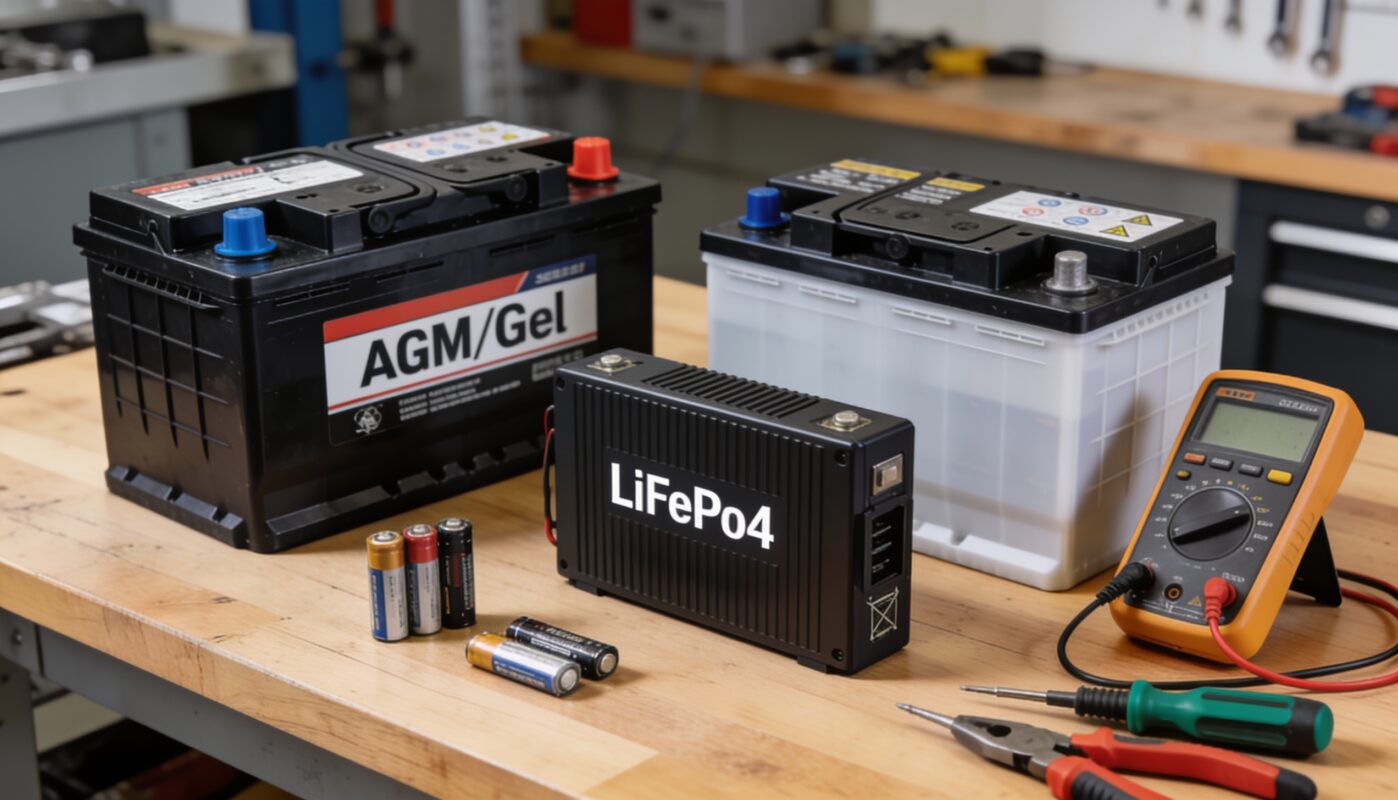
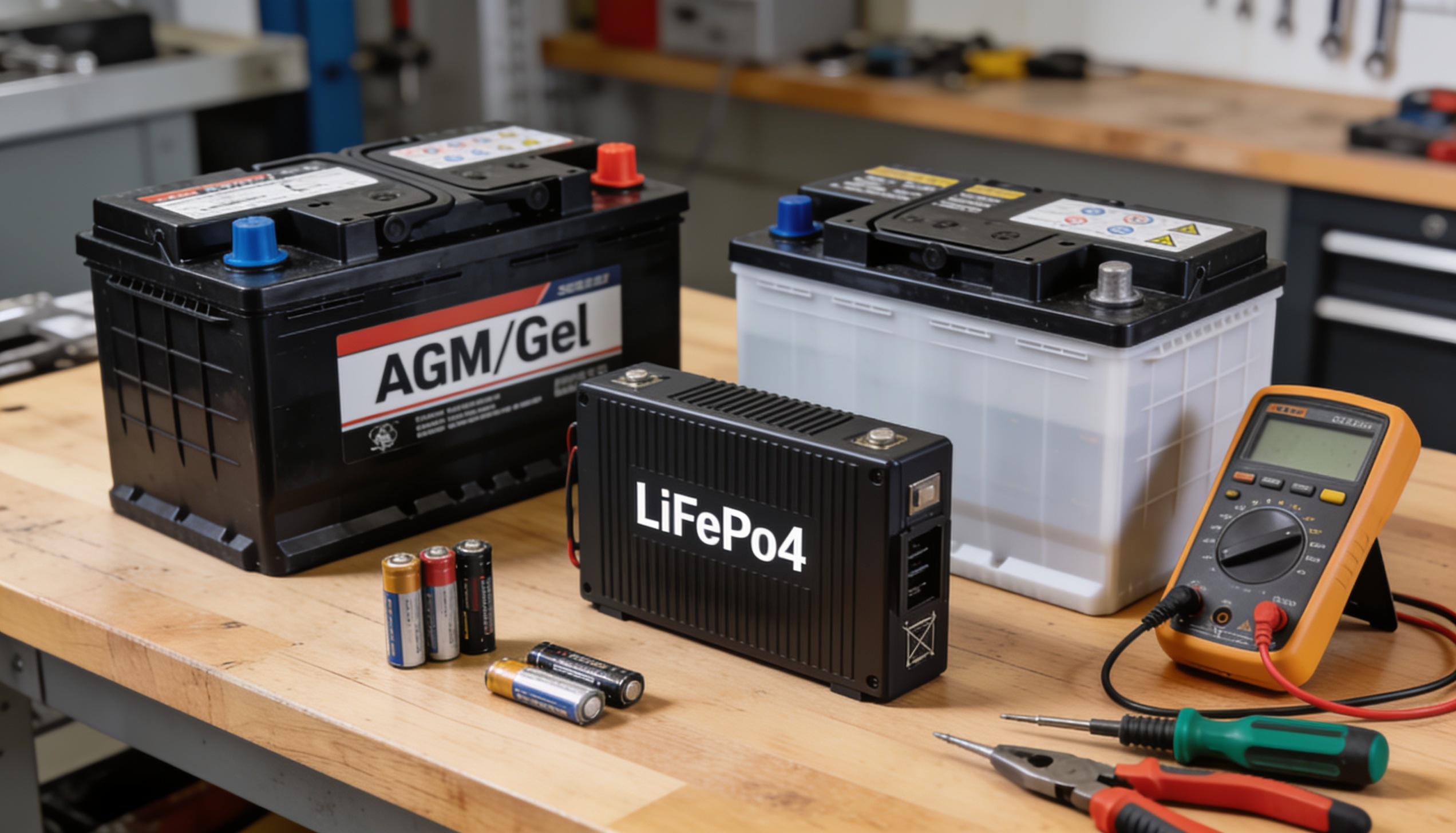
Broadly, batteries fall into two groups. Primary batteries are single-use. They suit low-drain devices such as remote controls, clocks, toys and some sensors. Secondary batteries are rechargeable, and they are the heart of modern backup and energy systems such as UPS units, vehicles and solar.
When homes and businesses ask about battery types, they usually mean rechargeable batteries. These come in several chemistries: lead-acid, AGM, gel, lithium-ion and LiFePO4, plus NiMH and NiCd for specialised uses.
Popular Battery Types: Strengths and Limitations
1) Flooded Lead-Acid
A long-established technology with a low upfront price and easy-to-find parts. Its strength is low initial cost. The downsides are more maintenance than modern batteries, sensitivity to frequent deep discharge, and the need for proper ventilation.
2) AGM (Absorbent Glass Mat)
A sealed lead-acid battery that is easier to look after than flooded types. It suits tidy backup installations and handles vibration well. Its cycle life is still limited compared with lithium in heavy daily use.
3) Gel Battery
Uses a gel electrolyte, reducing the risk of leaks. It suits some steady, continuous-discharge applications, but needs the correct charging profile, or its life will drop quickly.
4) Lithium-Ion (NMC/NCA)
High energy density and light weight. It suits applications that need a lot of energy per kilogram, such as EVs and compact energy systems. It needs a proper BMS and certified protection.
5) LiFePO4 (LFP)
A lithium chemistry that is very popular for home backup and solar. It has a long cycle life, tolerates deep discharge, is thermally stable, and needs little maintenance overall when the system is designed correctly.
6) NiMH and 7) NiCd
NiMH is found in small devices and some specialised uses. NiCd is durable in certain heavy-duty roles, but environmental restrictions and the memory effect mean it is no longer a main choice for home systems.

LiFePO4 vs Lead-Acid: Which Fits Your Application?
On day-one cost alone, lead-acid usually wins. On total cost of ownership, which includes maintenance, cycle count and the chance of replacement, LiFePO4 is usually better value for systems used every day. That is especially true for solar systems that cycle energy continuously.
LiFePO4 also stands out for deep discharge and fairly stable voltage, which helps inverters run more smoothly in many situations. It must, however, be used with equipment that supports the correct charging profile, and with a reliable BMS.
If you are planning a system for a home, shop or factory and want help deciding between on-grid, hybrid or a battery-based design, see our solar installation service with battery assessment. Our guide to on-grid vs off-grid vs hybrid solar explains the options.
How to Size a Battery (Basic Calculation)
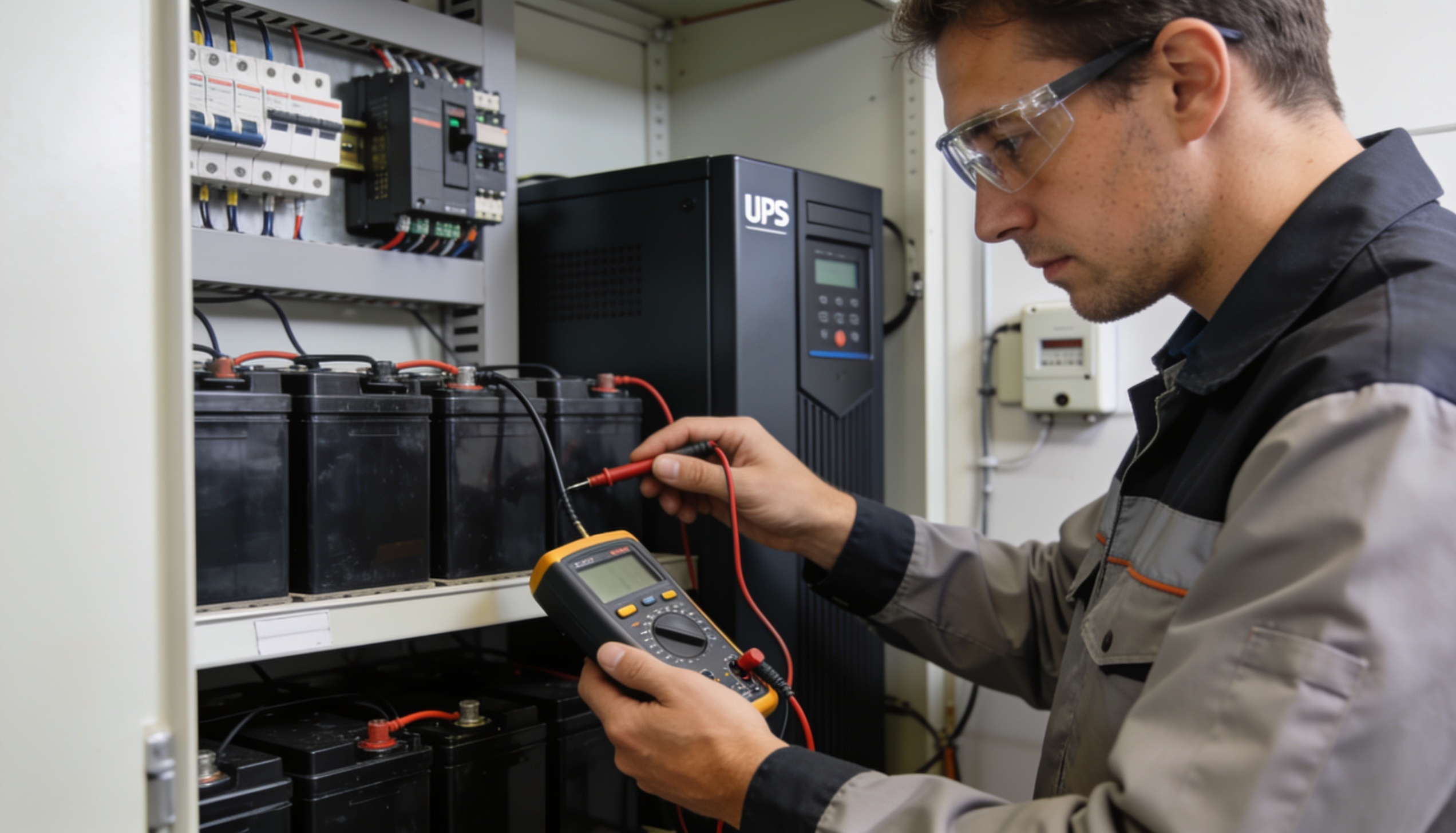
Start with daily energy use in Wh/day. For example, if you use 4,800 Wh per day and want one full day of backup, usable energy should be at least 4,800 Wh. With LiFePO4 planned at 80% depth of discharge (DoD), total capacity should be about 6,000 Wh or more. Then add another 15–25% to cover system efficiency and ageing.
Do not forget surge loads such as water pumps, refrigerators, motors and compressors. They affect the inverter size and how much current the battery must deliver. Without allowing for surges, the system may trip even when capacity looks sufficient.
In Pattaya, Chonburi and Rayong, battery sizing should consider daytime load, backup needs and future expansion. For a real site assessment, see our solar installation service in Pattaya, Chonburi and Rayong.
Key Factors Before You Buy
Before choosing a battery chemistry, record your real load for at least 7 days to see peaks and actual usage patterns. Designing from real data greatly reduces the risk of over- or under-specifying, and makes the budget more accurate.
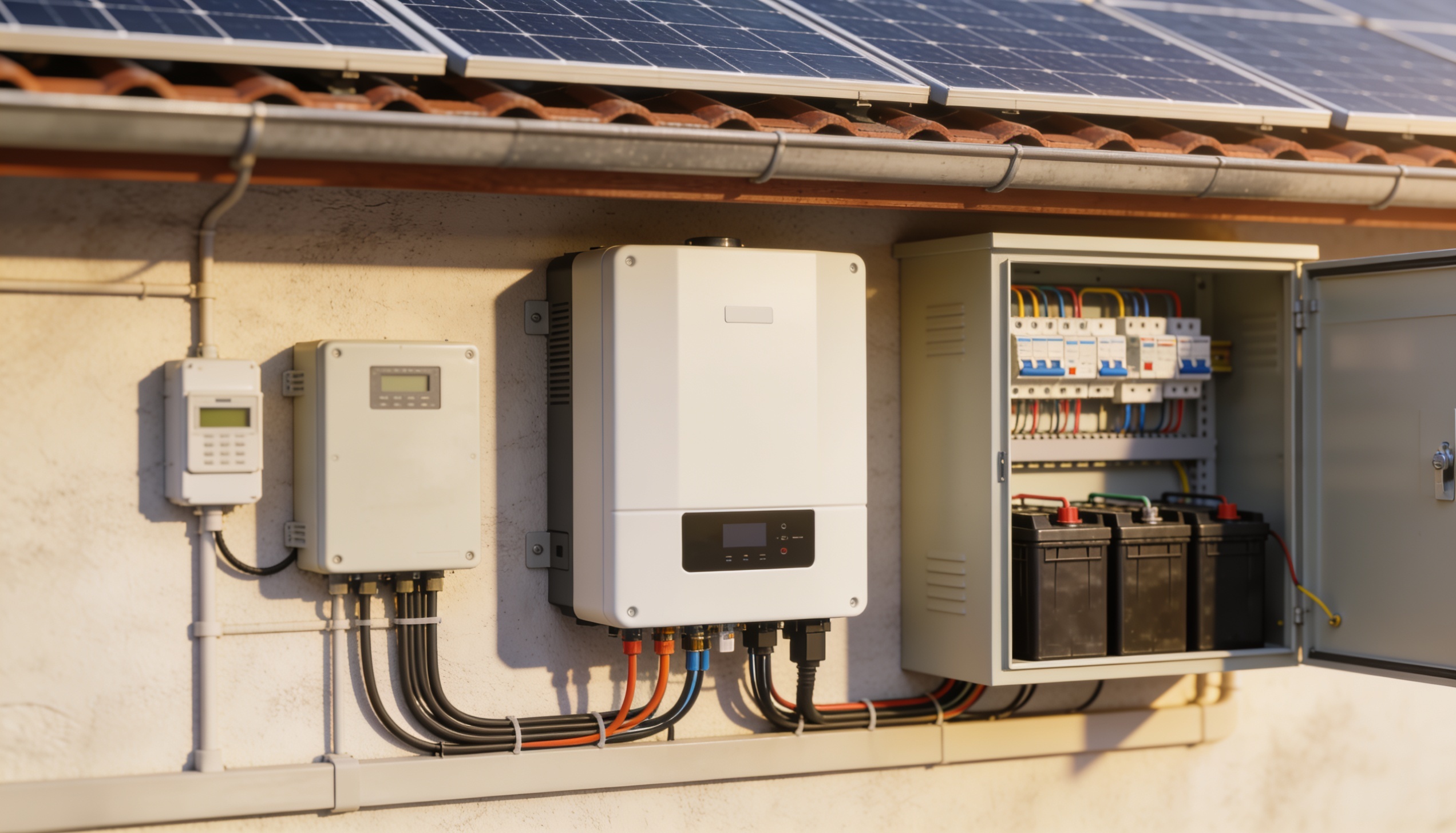
Choose a system voltage (12V, 24V or 48V) that matches the inverter and all other equipment. Plan safe wiring, fuse and breaker protection, and well-ventilated equipment placement, especially in a hot, humid country like Thailand.
Plan for after installation too. Check system health regularly: voltage, current, temperature and any abnormal alerts from the BMS or inverter. Then you can fix problems before they cause downtime.
Checklist for Choosing a Safe, Cost-Effective Battery
- Define daily load (Wh/day) and maximum peak load (W).
- Set the backup time you actually need.
- Choose a chemistry that matches the usage pattern.
- Check compatibility between battery, inverter and charger.
- Install in a well-ventilated place that is easy to reach for maintenance.
- Compare total lifetime cost, not just the purchase price.
- Check warranty terms and after-sales service.
A Professional Framework for Choosing a Battery
- Load profile: list every device with its real running power, hours of use per day and peak times. Typical devices are routers, access points, NVRs, POS terminals, mini servers, monitors, refrigerators, lighting and CCTV. Multiply to get total daily energy. If this data is wrong, the battery calculation will be wrong.
- Backup objective: be clear about how many hours of backup you need and for which equipment. Many businesses do not need to back up every load, only critical loads that affect revenue directly. Examples are payment systems, the network core, camera recorders, emergency lighting and access control. Separating critical loads cuts investment and improves value.
- System voltage and topology: for example 24V or 48V. Larger systems usually benefit from higher voltage, which reduces current in the cables and losses. All equipment must support it, with proper protection: DC breakers, fuses, surge protection, isolation switches and grounding. Design safety in from the start.
- Chemistry for the usage pattern: for daily cycling that needs high cycle life, LiFePO4 is usually the main choice. For standby use that is rarely discharged, AGM or gel may do the job at a lower upfront budget, with more limited cycle life and depth of discharge.
- Whole-system efficiency: include inverter efficiency, charging efficiency, wiring loss, temperature derating and conversion overhead. Allow at least 15–25% extra energy depending on site conditions.
- Expansion plan: leave room for more batteries, charging capacity, cabinet space, ventilation and monitoring ports.
- Safety and operating procedures: write clear site procedures for switching on and off, isolating loads in an emergency, checking temperature, spotting abnormal signs and raising alerts when voltage or temperature go out of range.
- Monitoring: log voltage, current, temperature, state of charge, state of health, cycle count and events. Review the data monthly to spot degradation trends before problems happen.
- Financial model: compare CAPEX and OPEX across scenarios. One example is lead-acid replaced every 2–3 years versus LiFePO4 replaced every 6–10 years, plus the cost of downtime. In many businesses, downtime matters more than the battery price. Actual lifespans depend on the product and conditions of use.
- Vendor and warranty: look for measurable warranty terms, such as cycle-based or throughput warranties. Also check service response time, spare availability and local support.
Three Example Scenarios
Retail shop with POS and CCTV. The goal is to keep payments and recording running. Back up only the POS, router, switch, NVR, selected cameras and key lights for around 4 to 8 hours. A suitably sized LiFePO4 gives high cycle life and easy maintenance, with an alert when the state of charge drops below a set threshold.
Home with solar. The goal is to save on daytime bills and have power at night. Choose a battery that handles daily cycling well, and set charging and discharging windows to match tariffs and real usage. If air conditioning or a water pump is a main load, size for the surge.
Small office with a server and network core. The goal is business continuity. Design basic redundancy, a backup power path and real-time alerts. Schedule maintenance windows to test the backup regularly, so you know it will work when needed.
Looking After Your Batteries After Installation
In the first week after commissioning, record baseline data: voltage, current, temperature and load behaviour. Use it as the reference for later health checks. Every month, check terminal tightness and cabinet cleanliness, and test all alert channels. Every quarter, run a controlled backup test and record the results.
In hot locations, invest in ventilation and shading, because they clearly affect battery life. Improving the environment a little can extend battery life more than upgrading to an expensive model. Keep inverter and BMS firmware up to date as the manufacturer recommends.
FAQ
Which battery is best for a home solar system?
For daily use with minimal maintenance, LiFePO4 usually suits best in the long run. With a limited upfront budget, AGM or gel may suit some cases, provided depth of discharge and the charging profile are controlled properly.
Why do batteries wear out faster than expected?
The main causes are high temperature, the wrong charging profile, frequent deep discharge and designs that do not allow for surge loads. Regular monitoring greatly reduces these problems.
When should a battery be replaced?
When capacity drops noticeably, voltage falls faster than normal, the system raises repeated alerts, or the battery swells or runs unusually hot. Have it checked by a specialist and plan the replacement before it affects operations.
Summary
There is no single best answer to “which battery?” for every job, only the best one for yours. Assess your real load, choose the right chemistry, use correctly specified equipment and plan maintenance properly. You will then get a stable, safe and cost-effective system for the long term.
For business owners, a battery is an infrastructure investment, not a one-off expense. Set a clear goal, such as lower bills, more continuity or less outage risk. Start with a right-sized, measurable project, then expand based on real data.
Need help choosing batteries or a solar backup system in Pattaya, Chonburi or Rayong? See our solar cell service, call 033-265-438, LINE @Nicesystem (include the @), or contact us for a site assessment.