
Solar & Energy
Solar Panels for SMEs in Pattaya, Chonburi & Rayong: How Much Can You Save?
Mar
Solar panels for business in Thailand make particular sense for SMEs in Pattaya, Chonburi and Rayong with high daytime electricity use. Restaurants, small hotels, offices, warehouses, small factories and retail shops are typical examples. Solar cuts the electricity you buy during working hours and makes long-term energy costs easier to plan.
Where Should an SME Start When Assessing Solar?
- Review at least 6–12 months of electricity bills to understand your real load.
- Check the roof area, sun direction, roof structure and a location for the inverter.
- Size the system to your daytime consumption, no bigger than you need.
- Plan monitoring so you can check generation and get alerts about faults.
If your SME already has a network, CCTV or IoT system, connecting the solar monitoring to it makes it easier to track generation, energy use and return on investment. Read this together with our guide to on-grid vs off-grid vs hybrid solar and our IoT solutions.
For SMEs in key economic areas such as Pattaya, Chonburi and Rayong, installing solar is one of the smartest investments while electricity prices keep rising. This article looks at why business owners in the Eastern region are switching to clean energy, and how much it can really save.
Why SMEs in Pattaya, Chonburi and Rayong Should Consider Solar
Chonburi and Rayong are not only the industrial heart of the EEC. They also have some of the strongest sunlight in Thailand, which directly benefits solar generation.
1. Control an Unpredictable Fixed Cost
For restaurants, hotels and small factories, electricity is a fixed cost that rises with the Ft (fuel adjustment) charge. Solar helps you stabilise part of your energy cost over the long life of the system, which can be up to around 25 years.
2. Possible BOI Tax Benefits
The Thai government encourages businesses to switch to clean energy. Under BOI measures, eligible businesses may be able to claim a corporate income tax exemption of up to 50% of the investment in solar installation. Eligibility rules and conditions change over time, so check the current BOI criteria, or ask your accountant, before relying on this benefit.
3. A Green Business Image
In a tourist city like Pattaya, a hotel or café that can say it runs on solar power during the day can attract environmentally conscious travellers.
How Much Can Solar Save?
The two most common questions are “How many years to pay back?” and “How much will my bill go down?” The table below gives rough indicative estimates for system sizes popular with SMEs:
| System size (kWp) | Roof area (m²) | Approx. bill reduction (THB/month) | Approx. payback (years) |
|---|---|---|---|
| 5 kWp | 30–35 | 2,500–3,500 | 4–5 |
| 10 kWp | 60–70 | 5,500–7,500 | About 4 |
| 20 kWp | 120–140 | 12,000–15,000 | 3.5–4.5 |
Note: these figures assume most electricity is used during the day with an on-grid system, which suits offices, coffee shops and factories working normal business hours. Actual savings and payback depend on current electricity tariffs, equipment prices and your own usage, so treat them as a guide only and ask for a site-specific calculation.
Value by Area
Pattaya: Hotels and Services
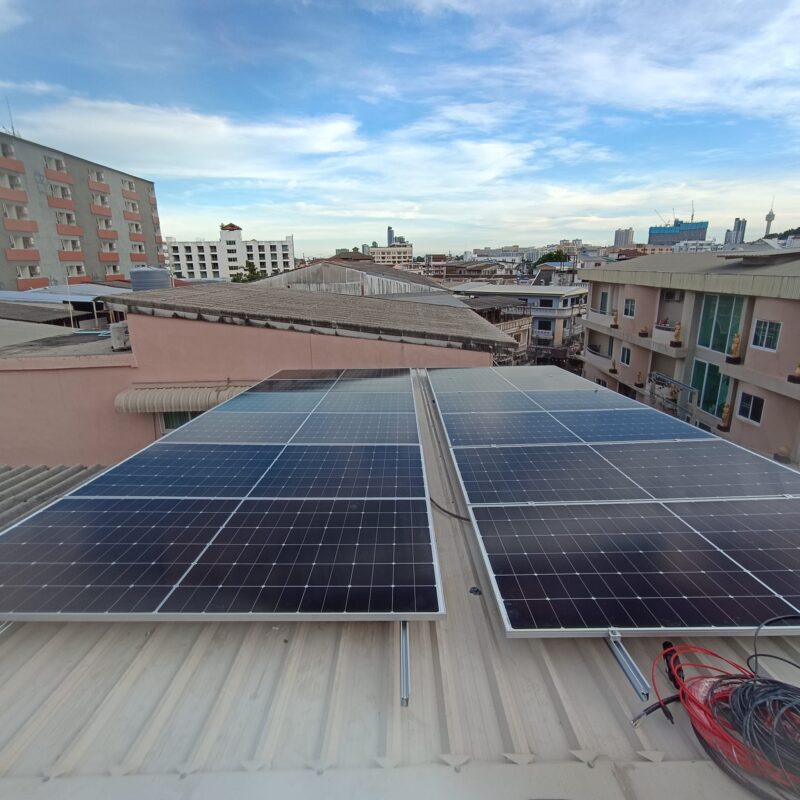
Pattaya never sleeps, but peak electricity use is during the day, driven by air conditioning. Rooftop solar on a hotel can cut a large share of consumption during the most expensive peak hours.
Chonburi and Rayong: Factories and Warehouses
Wide factory roofs suit large solar rooftop systems. Generating your own power, potentially at megawatt scale, can significantly reduce production costs and improve your competitiveness.
5 Things SMEs Should Know Before Installing Solar
- Study your usage pattern: on-grid systems pay off best when you use a lot of power during the day.
- Roof structure: have an engineer confirm the roof can carry the panels and equipment.
- Panels and inverters: choose Tier 1 brands with long warranties.
- Permits: grid-connected systems must be notified to and approved by the electricity authority (MEA or PEA) and the Department of Alternative Energy Development and Efficiency (DEDE).
- Maintenance: near the sea, as in Pattaya or Rayong, salt can build up on panels. Clean them at least twice a year for best performance.
How to Assess Whether Solar Is Worth It for Your SME
Start with how your business actually uses electricity. If most use is during the day, an on-grid system usually reduces bills more clearly than in buildings that mainly use power at night. Hotels, restaurants, offices, warehouses and small factories are good examples.
Information to Prepare Before Requesting a Design
- 6–12 months of electricity bills, plus any demand charges.
- Roof area, sun direction, structural strength and shading.
- Peak usage times and the equipment or machines that use the most power.
- Future load plans, such as EV chargers, cold rooms or new machines.
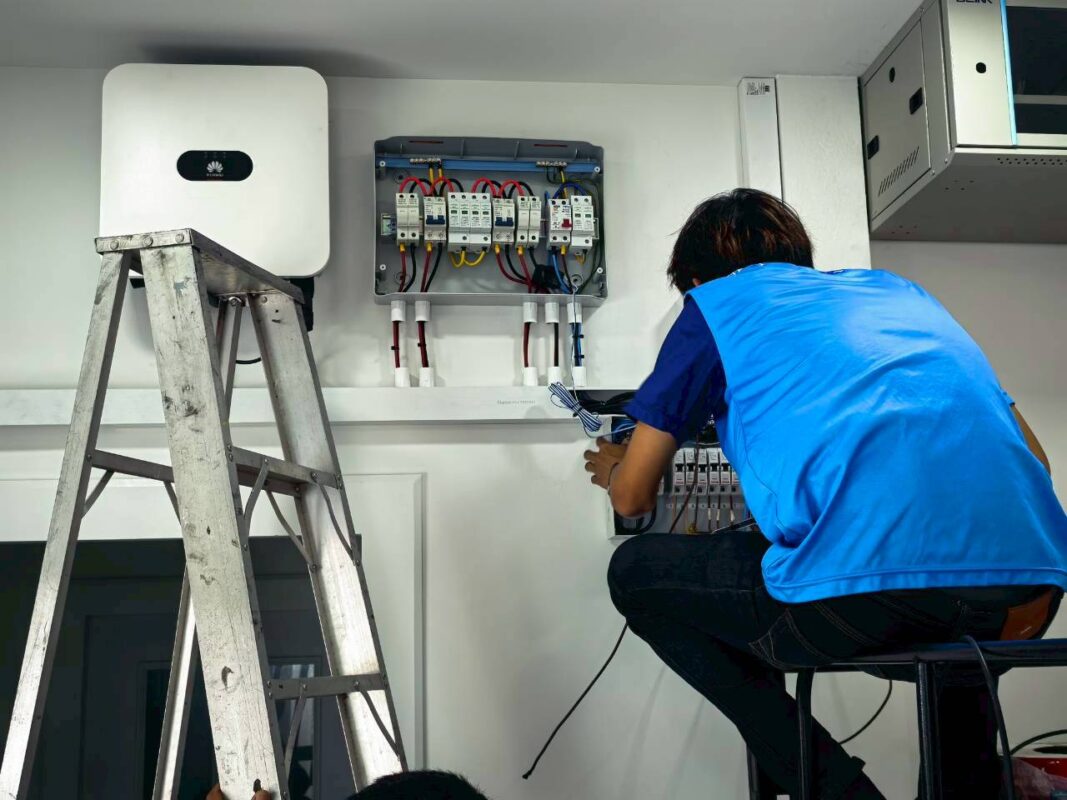
- Monitoring needs for tracking generation and fault alerts.
A good design sizes the system close to your real daytime use, not so large that it overproduces. It also includes a stable network for monitoring, so you can track savings and plan maintenance continuously.
FAQ: Solar for SMEs
Should an SME install the largest system the roof can hold?
Not always. A cost-effective system should match your real daytime consumption. If it produces far more than you use, payback can take longer. Assess your load profile, bills and working hours first.
Which businesses usually benefit most?
Businesses that use power continuously during the day: hotels, restaurants, offices, warehouses, cold rooms, small factories and retail shops. They use the solar power immediately, buy less from the grid and can track results through monitoring.
How should the system be maintained after installation?
- Check production through monitoring regularly.
- Clean the panels according to dust levels and location.
- Inspect the inverter, breakers, cables and key connections.
- Watch for new shading from trees or new buildings.
- Compare bills before and after installation to measure real savings.
Summary: A Low-Risk Way to Cut Costs
For SMEs in the Eastern region, solar is not just a green trend. It is a cost-reduction strategy whose results show up clearly on your electricity bill every month. The sooner you start, the sooner you save and the sooner you reach payback.
Want to Know What Solar Could Save Your Building?
For a preliminary budget, or a site survey by our engineers in Chonburi, Pattaya or Rayong to estimate your payback accurately, see our solar cell installation service. You can also call 033-265-438, 096-246-2324, LINE @Nicesystem (include the @), or contact us online.
Pingback: On-Grid vs Off-Grid vs Hybrid Solar: Which to Choose?